eCommerce vs mCommerce vs AppCommerce: A Shopify Growth Guide
The last ten years have brought about continuous changes in the digital commerce ecosystem. Initially, desktop online stores were the only option, and now, the whole range consists of mobile-friendly websites and, more recently, fully native mobile shopping applications. During the transition of the landscape, it is crucial for Shopify merchants to understand the differences between eCommerce, mCommerce, and AppCommerce for building a business that is both scalable and future-proof.
These three types of commerce are often considered synonyms, but in fact, they signify different ways through which the customers interact with the companies, make purchases, and build longevity of loyalty. Every single model has its customer journey role and yields different outcomes regarding performance, engagement, and retention.
According to Wikipedia, Shopify processed approximately US $292.3 billion in total merchant transactions in 2024, highlighting the platform’s massive role in global commerce.
The blog offers a detailed explanation of eCommerce, mCommerce, and AppCommerce, clearly outlining how each model functions within and beyond the Shopify ecosystem and how they support different stages of business growth.
Every insight shared in this content is based entirely on our team’s experience working with Shopify brands across multiple industries and growth phases. Rather than theory or assumptions, the strategies discussed reflect real implementation challenges, performance outcomes, and lessons learned from building, optimizing, and scaling Shopify stores. This experience-driven approach helps merchants confidently choose the right commerce model—or a strategic combination of models, for sustainable, long-term growth.
TL;DR
- eCommerce drives online discovery and sales through web-based Shopify stores.
- mCommerce improves mobile shopping experiences using responsive, browser-based storefronts.
- AppCommerce enables native apps for faster, personalized, repeat-driven shopping experiences.
- Shopify supports all commerce models within one unified, scalable ecosystem.
- Combining all three models creates sustainable, long-term growth for Shopify brands.
Key Points
- eCommerce is the basis for the Shopify brands, as it gives them the possibility to reach customers worldwide, to be visible through SEO and to acquire customers efficiently through web browsing.
- mCommerce takes eCommerce to the next level by making it mobile, which means that the advantages of usability, faster checkout and more sales will go to the mobile-first traffic coming from ads and social platforms.
- AppCommerce concentrates on retention, where native mobile apps are used to provide personalization and push notifications and to increase customer lifetime value.
- Shopify enables the orcs to handle eCommerce, mCommerce, and AppCommerce through one platform without the necessity of reconstructing systems as the business grows.
- Brands that strategically integrate all three commerce models reduce ad dependency and build stronger, long-term customer relationships.
Understanding the Evolution of Digital Commerce
Digital commerce did not become what it is today in a day. It went through various stages of development, which were influenced by changes in how consumers behaved, what devices were used, and what technology was available. Every stage of development came with addressing the new shopping patterns of the consumers and facilitating online selling channels by not only making them more accessible, faster, and more convenient but also more engaging.
- eCommerce can be defined as a desktop experience for consumers during the time when the internet usage was significantly at its peak on desktop PCs and people were getting familiar with transacting online through a web browser. At this particular time, visibility, product discovery, and selling were done through desktops as the main method of transaction.
- mCommerce emerged as a major player in the retail sector thanks to the widespread adoption of smartphones and mobile internet. As consumers began to use their mobile devices for searching and purchasing from any location, the companies adjusted to the new standards and made their sites mobile-friendly, implemented touch-based navigation, and improved checkout speed.
- AppCommerce originated when brands were looking for better consumer engagement, faster performance, and loyalty for more lifetime value. The use of native mobile apps made it possible to keep users for long periods, give them personalized experiences, and even direct communications through push notifications; hence, the commerce was leaning to be based on long-term relationships.
Shopify merchants are experiencing such a change, full of customer expectations, that they now want to be able to browse and shop at any time and on any device; here it also means to be able to interact with brands across different touchpoints.
What is eCommerce?
eCommerce (or electronic commerce) is the process of Exchange of goods and services online via the internet and web-based stores. ecommerce use has been primarily through desktop or laptop browsers, which makes it the first and the most popular form of online commerce.
In the Shopify ecosystem, e-commerce is the main web store where the customers search for goods and go through collections. Pay by using the browser checkout.
- Operates through web browsers on desktop and mobile devices
- Relies heavily on search engines, ads, and referral traffic
- Supports SEO-driven product discovery
- Requires no app installation for customers
- Easy to launch and scale globally
Why eCommerce Matters for Shopify Brands
Most businesses on Shopify rely heavily on eCommerce as their main backbone. This means that brands can create trust, get their products out to many more people, and do it all very quickly without much risk. Still, the eCommerce nature is mainly transactional and not very effective in bringing about long-term customer loyalty.
Shopify supports millions of merchants across more than 175 countries, making it one of the most widely adopted commerce platforms worldwide
What is mCommerce?
mCommerce (mobile commerce) is a subset of eCommerce that focuses on transactions completed through smartphones and tablets. It usually involves mobile-optimized websites accessed via mobile browsers such as Chrome or Safari.
For Shopify merchants, mCommerce means adapting their existing eCommerce store to deliver a better experience on mobile devices.
- Designed specifically for mobile screens and touch interaction
- Uses responsive Shopify themes and mobile layouts
- Enables faster checkout through digital wallets
- Improves usability compared to desktop sites on phones
- Still browser-based and dependent on mobile internet
Why AppCommerce Is Different
As smartphones became the primary shopping device, mCommerce turned into a necessity rather than an upgrade. It improves accessibility and conversion rates for mobile traffic, especially from social media and ads. However, it still lacks deeper engagement and retention capabilities.
What is AppCommerce?
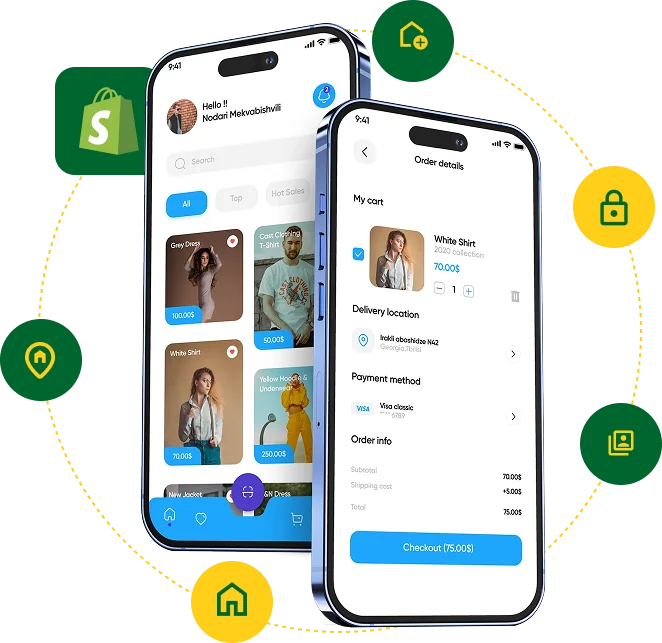
AppCommerce refers to buying and selling through native mobile applications built specifically for commerce and installed on a user’s device. These apps integrate directly with Shopify and offer a dedicated, high-performance shopping experience.
AppCommerce shifts the focus from one-time transactions to long-term customer relationships.
- Uses native iOS and Android mobile apps
- Installed directly on the customer’s device
- Delivers faster performance than mobile browsers
- Supports persistent login and saved preferences
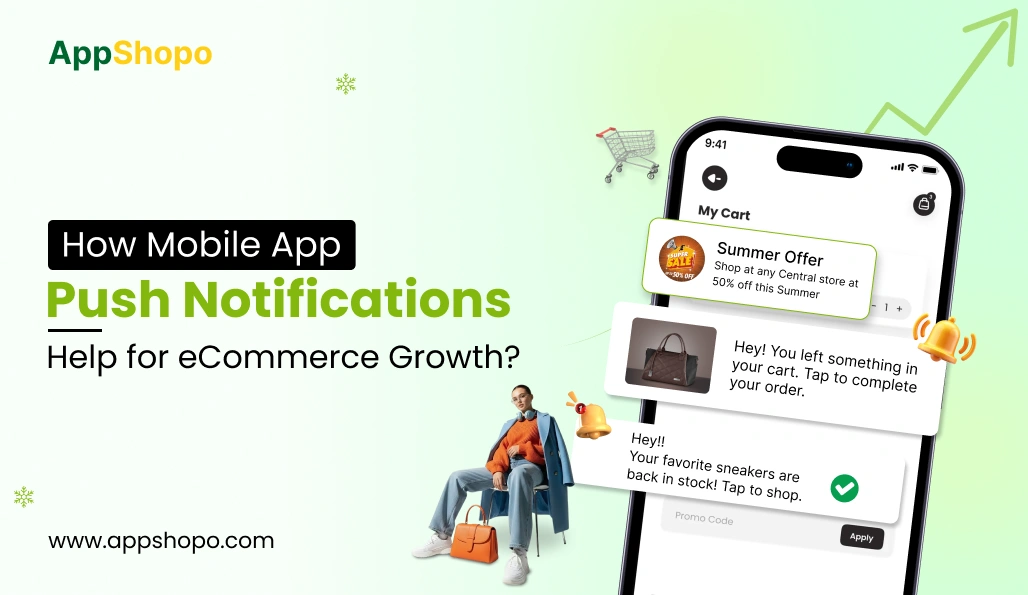
- Enables direct communication through push notifications
Why AppCommerce Is Different
AppCommerce provides a deeper level of personalization, speed, and engagement. By maintaining a constant presence on the customer’s phone, it allows Shopify brands to drive repeat purchases, build loyalty, and reduce reliance on paid marketing channels.
eCommerce vs mCommerce vs AppCommerce: Core Differences
The comparison presented here demonstrates the differences in access, performance, and customer engagement between eCommerce, mCommerce, and AppCommerce. eCommerce mainly contributes to the enhancement of discovery and search engine optimization, whereas mCommerce focuses on the improvement of mobile user experience. AppCommerce, on the other hand, offers the quickest experience, personalized services to the highest degree, direct communication with the company, and, consequently, the greatest opportunity for customer retention as well as repeated sales.
| Aspect | eCommerce | mCommerce | AppCommerce |
| Access Method | Desktop & mobile browsers | Mobile browsers | Native mobile apps |
| Installation Required | No | No | Yes |
| Performance Speed | Moderate | Optimized | Fastest |
| Personalization | Limited | Moderate | Advanced |
| Push Notifications | No | No | Yes |
| Retention Potential | Low | Medium | High |
| Best Use Case | Discovery and SEO | Mobile conversions | Loyalty and repeat purchases |
User Experience Differences Across Commerce Models
This UX comparison shows how user experience improves across commerce models. eCommerce relies on traditional navigation with short sessions, while mCommerce enhances touch usability. AppCommerce delivers native gestures, persistent logins, one-tap checkout, longer sessions, and deeper brand immersion, creating a more engaging and repeat-driven shopping experience.
| UX Element | eCommerce | mCommerce | AppCommerce |
| Navigation Style | Mouse and keyboard | Touch-based | Native gestures |
| Login Persistence | Low | Low | High |
| Checkout Speed | Slower | Faster | One-tap |
| Session Length | Short | Moderate | Frequent and recurring |
| Brand Immersion | Limited | Limited | High |
AppCommerce consistently delivers the most seamless and engaging user experience because it is purpose-built for mobile behavior.
Performance and Speed Comparison
The performance comparison presented in this study shows that AppCommerce surpasses browser-based commerce. eCommerce and M-Commerce rely on network conditions and browsers, and thus their performance varies, but mobile apps provide consistent load times, excellent caching, lower network dependence and app-optimized stability, leading to smoother and more reliable shopping experiences.
| Performance Factor | eCommerce | mCommerce | AppCommerce |
| Load Time Consistency | Variable | Improved | High |
| Asset Caching | Limited | Limited | Advanced |
| Network Dependency | High | High | Lower |
| Stability | Browser-dependent | Browser-dependent | App-optimized |
Native apps outperform browsers because they preload content and rely less on real-time network requests.
Conversion, Retention, and Revenue Impact
This contrast reveals the influence of commerce models on revenue results. eCommerce has the lowest conversions and the highest abandonment, whereas mCommerce boosts mobile performance. AppCommerce, through quicker checkout and continuous customer engagement, secures the highest conversion rates, the lowest cart abandonment, stronger repeat purchases, and the maximum customer lifetime value.
| Metric | eCommerce | mCommerce | AppCommerce |
| Conversion Rate | Lowest | Medium | Highest |
| Cart Abandonment | High | Medium | Low |
| Repeat Purchase Rate | Low | Medium | Very high |
| Customer Lifetime Value | Limited | Improved | Maximum |
For Shopify brands focused on growth efficiency, AppCommerce delivers compounding benefits over time.
Marketing and Communication Capabilities
This channel comparison highlights how communication capabilities expand with AppCommerce. While eCommerce and mCommerce rely mainly on email and SMS, AppCommerce adds push notifications and in-app promotions, giving brands stronger direct customer reach and faster, more personalized engagement without dependence on third-party traffic sources.
| Channel | eCommerce | mCommerce | AppCommerce |
| Email Marketing | Yes | Yes | Yes |
| SMS Marketing | Yes | Yes | Yes |
| Push Notifications | No | No | Yes |
| In-App Promotions | No | No | Yes |
| Direct Customer Reach | Limited | Limited | Strong |
Push notifications alone make AppCommerce a powerful owned marketing channel, reducing dependency on paid ads.
SEO vs Retention: Strategic Roles
This strategy comparison shows how each commerce model serves a different goal. eCommerce and mCommerce excel at search visibility and organic traffic acquisition, while AppCommerce focuses on retention and owned audiences, helping brands build stronger customer relationships beyond search-driven discovery.
| Strategy Focus | eCommerce | mCommerce | AppCommerce |
| Search Visibility | High | High | None |
| Organic Traffic | Strong | Strong | Not applicable |
| Retention Strategy | Weak | Moderate | Strong |
| Owned Audience | Limited | Limited | High |
AppCommerce should be viewed as a retention engine that complements eCommerce and mCommerce rather than replacing them.
When Each Commerce Model Makes Sense for Shopify Brands
In general, eCommerce, mCommerce, and AppCommerce are indicators of diverse levels of digital commerce maturity. While eCommerce emphasizes the possibility of being discovered through online stores, mCommerce brings delightful experiences to the user with mobile phones, and AppCommerce gives importance to keeping users, personalizing their experience, and developing strong customer ties. They are all integrated into a single, expanding commerce plan for contemporary Shopify brands.
1. eCommerce Is Best When
eCommerce is the best option for Shopify brands in their early growth stages or those experimenting with new markets. Merchants can launch rapidly, validate the demand for their products, and through search engines and paid ads, acquire a wide audience. Web-based stores are most of the time good enough if sales are not regular or seasonal since they don’t need to engage customers deeply.
When SEO and content marketing are the main acquisition channels, eCommerce is the only option that works best. The reason is that search engines index web pages (and not mobile apps), so eCommerce remains the only way for the customers to discover you through visibility, organic traffic, and so forth. For brands that are financially challenged, eCommerce is still the most affordable and also the easiest option to scale up or down depending on their situation.
2. mCommerce Is Best When
mCommerce is essential when a Shopify store receives most of its traffic from mobile devices and its desktop sales start to fall. Today, customers are more and more buying through mobile phones, so an experience that is mobile-optimized is very important in order to cut down the obstacles, make the site easier to use, and stop cart abandonment, which is often caused by poorly designed mobile versions of the site.
This strategy is great for the companies that rely on social media, influencer marketing, or mobile advertising, as these are the areas where most of the traffic goes to mobile devices. mCommerce brings about quick checkout, touch-friendly navigation, and mobile payments, thereby raising the conversion rates without the burden of investing in a costly and complex native mobile app.
Also Read: Retail Store App Growth Mobile Era
3. AppCommerce Is Best When
AppCommerce is the ultimate model for Shopify brands that want to focus on long-term growth, customer retention, and repeat revenue. A native mobile app, in this case, would definitely help intuitively and quickly to make customers buy frequently, especially when a large part of sales comes from returning customers.
Such brands are mainly into products or services that are consumable or that require engagement; thus, subscription and membership, where ongoing interaction is vital, really benefit from this kind of mobile app. AppCommerce also gradually lessens the need for paid advertising because through push notifications and app promotions, brands are able to communicate directly with customers, and this is a great way to create a strong customer channel that is owned by the brands, and thus, customer lifetime value is maximized.
The Role of Shopify in Supporting All Three Models
Shopify makes it easy for merchants to transition among the three commerce models with a single platform that centrally controls the selling online through various devices and channels. This method gives the brands the advantage of being operationally consistent, using one data source for all products, customers, and orders, and being able to grow along with the changes in customer conduct and business requirements, without moving to another platform.
- A web-based eCommerce solution that can create and increase brand visibility, attract new customers via search engines and paid ads, and handle the entire process of products, payments, and orders in a smooth, scalable way. This model will, in most cases, lay down the cornerstone of online selling and thus be very important for gaining new customers and getting them to make a first purchase.
- mCommerce solutions that, no less than being mobile-optimized, guarantee that Shopify stores operate flawlessly on smartphones thanks to responsive design, faster page loading, and smoother mobile checkout. These functionalities empower the brands to meet the mobile-first customer expectations and at the same time to offer a consistent shopping experience through all the devices.
- By collaborating with native AppCommerce, Shopify integration would happen and consequently, real-time tracking of products, stock, customers, and orders would be possible. Thus, with the brand’s engagement features through the app like push notifications, personalized experiences, faster repeat purchases, and loyalty programs, customers will have a better experience.
Starting with eCommerce and subsequently moving to mCommerce and AppCommerce, depending on the brand’s operational scale, not only offers an effective way to synchronize the commerce strategy with shifting consumer behavior and gradual business expansion but also ensures the current systems and processes are not affected.
Also Read: Shopify Store needs an eCommerce mobile App
The Future of Commerce for Shopify Brands
The commerce future of Shopify brands is not a matter of choosing eCommerce, mCommerce, or AppCommerce, but rather a question of deliberately mixing all three and layering them into a customer-centric growth strategy. Each commerce model fulfills its individual role at various phases of the customer journey, and in unison, they provide a growing, durable support system for the success that lasts.
Rather than competing with one another, eCommerce, mCommerce, and AppCommerce work best when they support each other.
1. eCommerce: The Engine of Discovery and Brand Visibility
eCommerce remains the entry point for most customers. It is where brands are discovered, evaluated, and trusted for the first time.
Key strengths of eCommerce include:
- Search engine visibility (SEO): Blogs, category pages, and product listings attract organic traffic.
- Content and paid marketing: Ads, influencer links, and social campaigns usually land on the website.
- Brand storytelling: Websites are still the strongest platform for explaining value, credibility, and differentiation.
For Shopify brands, eCommerce is essential for customer acquisition. It introduces new audiences to the brand and fuels the top of the funnel. However, relying only on eCommerce also means growing dependence on paid ads, rising acquisition costs, and intense competition.
2. mCommerce: Optimizing the Mobile Shopping Experience
mCommerce builds on eCommerce by optimizing the shopping experience specifically for mobile browsers, where most users now spend their time.
mCommerce improves performance by:
- Making browsing smoother on smartphones
- Reducing friction with faster load times
- Simplifying mobile checkout flows
- Supporting mobile-first behaviors like short sessions and quick reorders
For global Shopify brands, mCommerce is especially critical because in many regions mobile is the primary or only shopping device. A strong mobile website ensures that discovery traffic actually converts.
However, mCommerce still depends on browsers, cookies, and paid traffic, which limits long-term control over the customer relationship.
3. AppCommerce: Driving Retention and Lifetime Value
AppCommerce represents the retention and loyalty layer of modern commerce. A mobile app is not designed mainly for discovery, it is built for repeat purchases, engagement, and long-term relationships.
AppCommerce excels at:
- Faster and more stable performance than mobile web
- Personalized shopping experiences
- Direct communication through push notifications
- Easy reordering and saved preferences
- Stronger customer loyalty and higher lifetime value
For Shopify brands, AppCommerce transforms one-time buyers into owned customers, reducing dependence on paid ads and increasing predictable revenue over time.
Conclusion
For Shopify brands aiming for long-term success, AppCommerce is no longer a luxury. It is a strategic extension of eCommerce and mCommerce that addresses their biggest limitations: retention, engagement, and owned customer communication.
Solutions like AppShopo make AppCommerce accessible to Shopify merchants without the complexity of custom development. By enabling native mobile apps with real-time Shopify sync, push notifications, and optimized mobile experiences, AppShopo helps brands convert loyal customers into repeat buyers.
The eCommerce landscape is getting more and more competitive, and the brands that manage to win are going to be those that know the interconnection and the impact of eCommerce, mCommerce, and AppCommerce and are willing to allocate money to the channels that cultivate long-lasting customer bonds.
FAQs
1. What are the main factors that differentiate eCommerce, mCommerce, and AppCommerce?
eCommerce deals with online selling via both desktop and mobile websites, with the main focus on the customer’s reach and discovery. mCommerce is the most advanced mobile browsing experience, alongside the use of responsive design and faster checkout for the mobile buyers. AppCommerce uses the already-installed mobile apps, providing maximum speed, personalization, pushing notifications, and keeping customers loyal through a dedicated shopping environment.
2. Should Shopify brands adopt all three commerce models from the very beginning?
No, they shouldn’t. Most of the time, Shopify brands start their journey with eCommerce that is not only to obtain visibility but also to check demand. When the traffic starts to be mostly mobile, mCommerce will be bringing the best accessibility. The introduction of AppCommerce will take place when there are repeat purchases, loyalty, and retention that are striving to be the strategic priorities for long-term, sustainable growth.
3. Is AppCommerce restricted to only the biggest Shopify brands?
Definitely not. AppCommerce is not just for big companies anymore. The creators of modern Shopify apps such as AppShopo grant small and medium-sized brands the opportunity to create user-friendly mobile apps at a lower technical cost and thus getting repeat sales, personal interaction with customers, and many more benefits.
4. Are AppCommerce and SEO plus website traffic nothing but the same?
The answer is negative. AppCommerce supports both eCommerce and mCommerce. The websites will still be the all-important ones for SEO, customer acquisition through discovery, and first-time customers. The mobile apps would be directed towards keeping customers, boosting loyalty through engagement in the owned channels like push notifications, and thereby increasing lifetime value.
5. At what point should a Shopify store consider a mobile app rollout?
A Shopify store should think about it when it has regular customers who always order the same products hence creating a good loyal customer base or offering subscriptions. AppCommerce is particularly important at this time when the brand wants to lessen the impact of paid ads and form closer, more permanent relationships through direct, owned customer engagement channels.

Pankaj Arora
Founder, AppShopo

Pankaj Arora is a technology entrepreneur and the Founder of AppShopo, with over 10 years of experience in helping businesses transform websites into high-performing mobile apps. His expertise spans eCommerce app development, Shopify and WooCommerce integrations, mobile UX optimization, and scalable app delivery. Through AppShopo, Pankaj has enabled brands worldwide to launch fast, reliable Android and iOS apps that drive higher engagement, retention, and mobile sales.