Fashion eCommerce App Development Guide for Clothing Brands
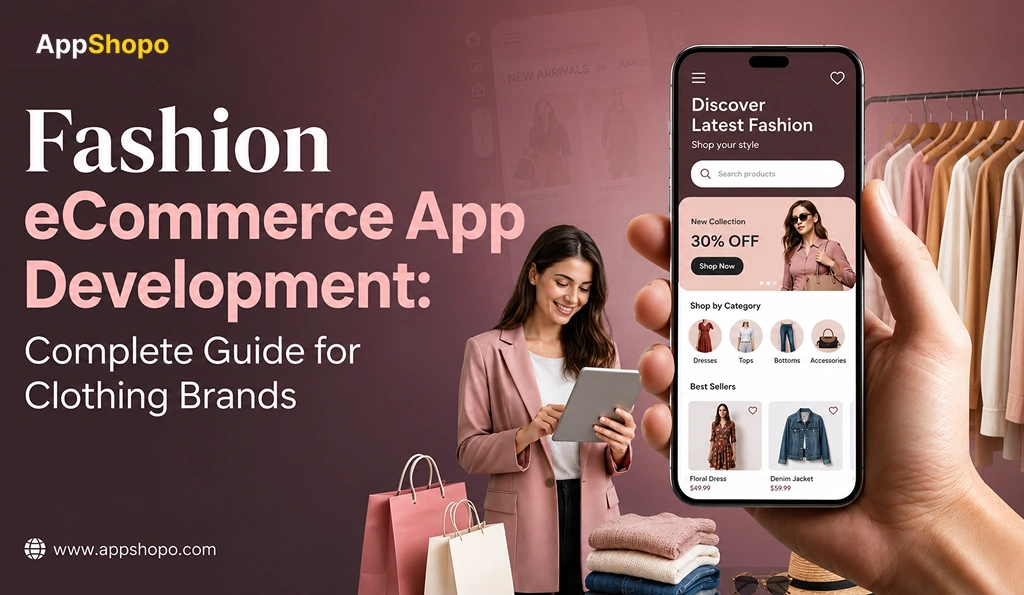
Fashion is no longer just a category inside ecommerce. It’s the biggest one. According to Statista, the fashion ecommerce market is estimated at $997 billion in 2026, making it the largest B2C ecommerce segment in the world. That scale is exactly why clothing brands are moving past a mobile-friendly website and investing in fashion ecommerce app development instead. A website gets a brand into the market. An app can make or break a brand in its market, particularly given how shoppers today spend more time within apps than browser tabs and expect similar speed and personalization from fast fashion brands as from other businesses.
This guide presents what fashion ecommerce app development actually involves for clothing brands in 2026, from features and costs that matter, through technology stack, process from first conversation to launch and selecting an experienced development partner who understands fashion specifically rather than generic ecommerce development partners – whether you need your first quote compared or want an understanding why one proposal cost three times another, this cover all bases!
Clothing brands exploring this investment usually fall into two camps: either they want their own dedicated app, or are exploring multi-vendor or marketplace models. Much of what follows applies equally well for either approach; only certain sections indicate where each path diverges.
Quick Answer
- Fashion ecommerce app development involves building an exclusive mobile application for clothing brands, complete with AI product recommendations, AR try-on capability, fast checkout process and loyalty tools that cannot be achieved on mobile websites alone.
- Cost estimates typically range from $30,000 for single brand DTC apps up to over $250,000 for multi vendor marketplace apps with advanced personalization features.
- Perfect for clothing brands who already have repeat buyers looking for dedicated sales channels rather than opening brand new storefronts for every new business venture.
TL;DR
- Fashion ecommerce app development in 2026 will focus heavily on AI personalization, AR try-on capabilities, and near instant checkout.
- A direct to consumer (DTC) application typically costs from $30k-80k while marketplace apps featuring multiple vendors run $100K-250K+.
- Tech stack is of crucial importance in app development; choosing between React Native or Flutter, Shopify or headless commerce backend and payment layer will determine its success more than any single feature.
- Multi-vendor marketplace apps require different capabilities than single vendor apps; most clothing brands only need single vendor apps as such platforms offer faster-load times for users.
- Fashion app budgets frequently go over due to an inadequate investigation phase.
Key Takeaways
- Fashion ecommerce apps tend to outsell mobile websites in terms of conversion rate due to reduced friction (re-entering payment info, slow load times and lost wishlists). Also noteworthy is how AR try-on is now used as an effective conversion and return rate tool, particularly with regards to shoes, outerwear and eyewear products.
- Most DTC clothing brands only require a single vendor app; marketplace features add costs and complexity that don’t justify themselves unless running multiple brand platforms.
- Shopify-based businesses have an advantage, as product, pricing and inventory data can sync directly through existing APIs instead of being custom developed from scratch. And development process matters just as much – skipping discovery leads directly to budget overruns!
What Is Fashion Ecommerce App Development?
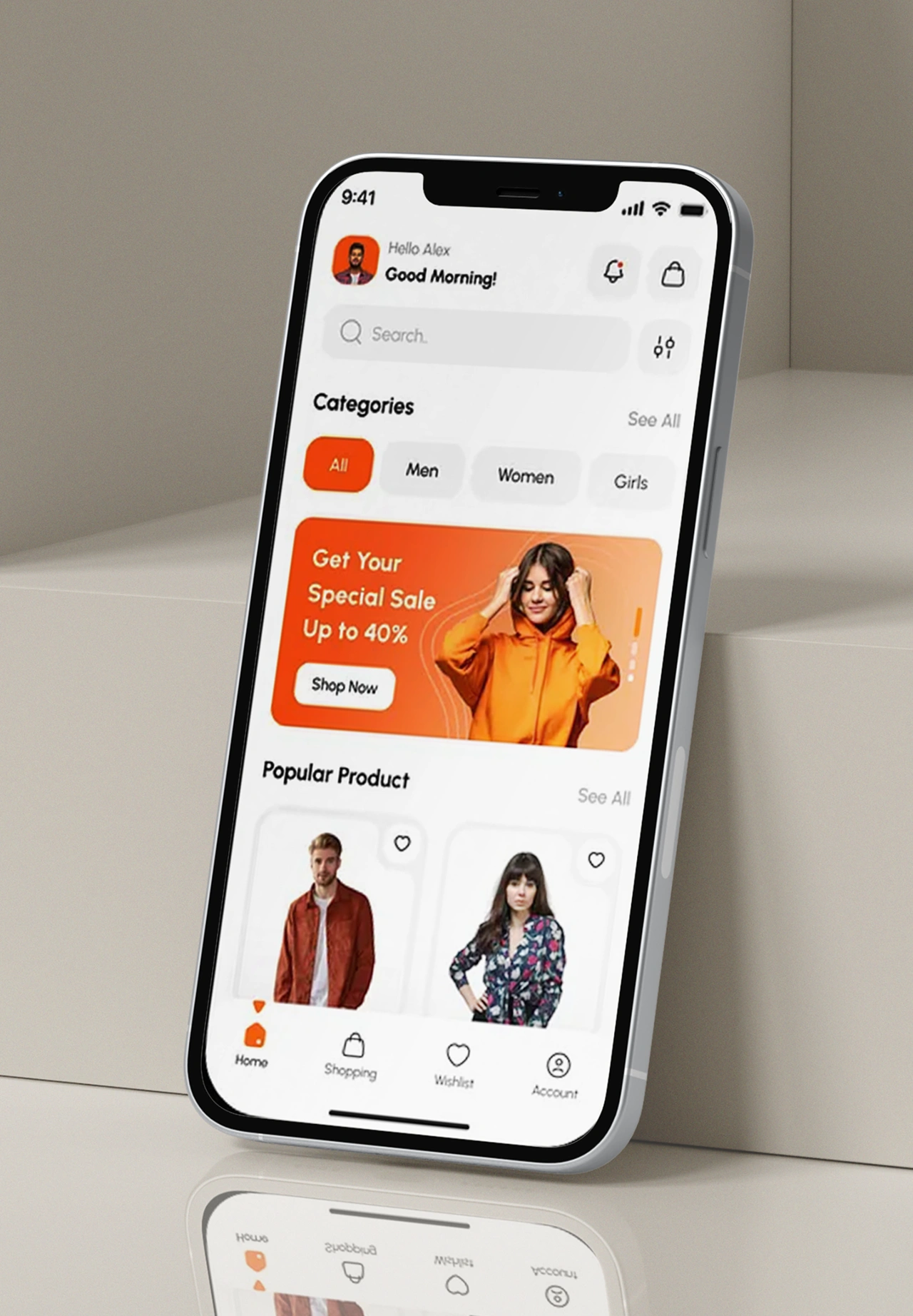
Fashion ecommerce app development is the process of building a mobile app that lets customers browse, buy, and manage orders from a clothing or apparel brand, separate from (but usually connected to) the brand’s website.
There are three common structures.
- Single vendor apps represent clothing brands selling directly, which is what DTC brands usually require.
- A multi-vendor marketplace app, similar to Shein or ASOS’ operation, hosts multiple brands or sellers under one platform.
- B2B fashion apps facilitate wholesale ordering between brands with wholesale operations and retail buyers – another narrow use case reserved exclusively for such organizations.
If you are selling direct to consumers with clothing products, starting with a single vendor app may often be sufficient to meet consumer expectations. Marketplace features (vendor onboarding, commission splits and multi-seller inventory management) add real costs while taking months longer to implement; they only pay dividends if your platform actually serves multiple brands rather than just yourself alone.
Also Read: How to Launch Shopify Fashion & Apparel Mobile App
Why Clothing Brands Invest in Fashion Ecommerce App Development
Fashion is a repeat-purchase business more than most retail categories. A customer who buys a jacket in October is a strong candidate to buy boots in November and a gift for someone else in December. That pattern rewards a channel built for return visits, and that’s exactly what an app is.
Push notifications, wishlists that persist across sessions and app-only drops don’t exist the same way on mobile websites; customers browsing their phone have your app icon right alongside those they access daily instead of being hidden three folders deep. That proximity alone changes how often a customer comes back.
There’s also a data angle. An app captures far more granular behavior data than a website typically does: what a customer browsed but didn’t buy, how long they spent on a product page, which push notifications they actually open. That data feeds directly into better personalization, which is where a lot of the conversion lift in fashion ecommerce app development actually comes from.
Core Customer-Facing Features in Fashion Ecommerce App Development
A feature list on its own doesn’t tell you much. What matters is which problem each feature solves and whether it’s worth the build time for your specific brand. Below are the features that show up in nearly every serious fashion ecommerce app built in 2026, along with the real reasoning behind each one.
1. AI Product Recommendations
An AI recommendation engine tracks what a shopper views, adds to cart, and skips, then uses that pattern to surface items they’re likely to want next. The value isn’t the buzzword. It’s a shopper opening the app to a homepage that already reflects their taste, which shortens the distance between opening the app and adding something to cart. This engine needs real usage data to work well, so expect the first two to three months post-launch to be a tuning period rather than peak performance.
2. AR Try-On
Augmented reality try-on lets a shopper preview how a garment, shoe, or accessory looks before buying. It has moved from an experimental extra to a standard ask in fashion ecommerce app development, mainly because it cuts return rates tied to sizing guesswork. It’s a strong investment for shoes, outerwear, and eyewear, where fit and appearance drive most returns. It matters far less for basics like plain t-shirts, where sizing variance is low.
3. Fast, Saved-Payment Checkout
Every screen added from ‘add to cart’ to ‘order placed’ loses business. Fashion apps are designed with returning customers in mind. All or most of their payment and shipping methods are preset. Hence, returning customers can make purchases in one or two taps instead of a sequence of lengthy steps.
4. Wishlist and Back-in-Stock Alerts
A wishlist keeps interest alive across sessions. Converting back-in-stock notifications into sales needs little to no effort. Particularly in fashion, stock of certain popular sizes and colors sell out and distract customers from making additional purchases. Customers are even more likely to give up making purchases for a particular size and color without a reminder to return when the item is back in stock.
5. Reviews and Social Proof
Fashion returns are often attributed to the anxiety of the customer regarding fit and style. The best method to reduce the anxiety of customers is to post photos and reviews of the product in use, especially if the reviewer has a similar body type and purchased the same item. Such a customer will be better confident than one who makes a purchase based on a studio photo.
6. Loyalty and App-Exclusive Drops
Fashion apps give a customer an incentive to keep the app installed after making the first purchase as a customer can make additional purchases more easily. This system is usually connected to the app and website loyalty system hence the rewards are consistent for all customers.
Read Also: Top Shopify Mobile App Builders Fashion & Apparel Brands Are Using
The Tech Stack Used in Fashion Ecommerce App Development
The choice of technology stack fundamentally determines the launch speed, scalability, and long-term maintenance costs of fashion e-commerce apps. If the wrong technology stack is selected, most brands will have to rebuild their apps within two years of launch. In 2026, the mainstream option in this industry track is cross-platform frameworks. Compared with the separate native codebases for the iOS and Android platforms, cross-platform frameworks have prominent core advantages, with only negligible performance losses.
| Layer | Common Choice |
| App Framework | React Native or Flutter |
| Commerce Backend | Shopify Storefront API, headless commerce, or custom |
| AR/Try-On | Third-party AR SDK or custom computer vision |
| Payments | Apple Pay, Shop Pay, PayPal, Stripe |
| AI/Personalization | Recommendation engine layered on customer and behavior data |
| Push & Retention | OneSignal, Klaviyo, or native push |
Brands who work on Shopify are at an advantage. This is because the product, pricing, and inventory data for a particular brand are already preloaded. This is especially beneficial to the developer as they do not have to build a content system from scratch. This significantly reduces the costs and the time it takes to build these systems.
Fashion Ecommerce App Development Cost and Timeline
Cost depends heavily on which of the three structures (single-vendor, marketplace, or B2B) you’re building, and how many of the features above you include. A single-vendor DTC app with a clean, standard feature set costs far less than a marketplace platform juggling multiple sellers and commission logic.
For a single-brand DTC app with catalog, cart, checkout, and basic personalization, expect $30,000 to $80,000, depending on how much custom design and integration work is involved. A marketplace-style app supporting multiple vendors, commission splits, and seller dashboards runs $100,000 to $250,000 or more, since it requires an entirely separate layer of backend logic that a single-vendor app doesn’t need at all. Adding AR try-on, advanced AI personalization, or real-time inventory sync across many warehouses pushes any tier toward the higher end of its range.
| Complexity Tier | Typical Cost | Typical Timeline |
| Basic Single-Vendor | $30,000–$80,000 | 6 weeks–4 months |
| Advanced Single-Vendor (AR, deep AI) | $80,000–$150,000 | 4–7 months |
| Multi-Vendor Marketplace | $100,000–$250,000+ | 6–12 months |
Where the development team is based also affects cost meaningfully. A team in a major US tech hub often charges well above a team in Eastern Europe, South Asia, or a smaller US market, without necessarily producing a better result. This is one of the more overlooked ways fashion brands overspend on app development.
Our Fashion Ecommerce App Development Process
Skipping steps in this process is the most common reason projects go over budget and past deadline. A rushed discovery phase means the development team builds against assumptions instead of your brand’s actual needs, and fixing that after the fact always costs more than getting it right at the start.
- Discovery and Scoping. The team maps how customers currently shop on your website, where they drop off, and which features matter most for your specific brand and product category. This typically takes one to two weeks.
- Design. UI and UX design comes next, built around your brand’s existing visual identity rather than a generic template. Fashion is a visual category first, and a flat or dated-looking product page will hurt conversions no matter how fast the checkout underneath it is.
- Development. This is where the tech stack choices come into play. A cross-platform single-vendor app with standard features typically takes six to twelve weeks to build. Marketplace features, AR try-on, or custom AI logic extend that timeline considerably.
- QA and Testing. Every screen gets tested across device sizes, both operating systems, and real payment flows before submission. Fashion apps need particularly heavy testing on images and video, since lookbooks and product photography are usually the largest files in the app.
- App Store Submission. Apple and Google both review apps before launch, typically taking a few days to two weeks, and that window isn’t fully in the development team’s control. Building buffer time in here prevents a launch date from slipping unexpectedly.
- Post-Launch Support. The work doesn’t end at launch. OS updates, certificate renewals, and bug fixes require ongoing attention, and this is where many brands get surprised by costs they hadn’t planned for.
Also Check: Fashion App Developers for High-Converting Apps
Common Challenges in Fashion Ecommerce App Development
Fashion ecommerce comes with a set of problems that don’t show up the same way in other retail categories, and a strong development partner plans for these from the outset rather than patching them in after launch.
- High return rates are one of the biggest, largely driven by sizing guesswork. AR try-on, detailed fit guides built from real brand data, and customer review photos on product pages all chip away at this, without eliminating it entirely.
- Inventory sync across channels is another recurring issue. A customer who adds an item to cart only to see “out of stock” at checkout is a lost sale and a frustrated one. Connecting the app directly to the same inventory system used by the website and physical stores keeps stock levels accurate across every channel in near real time.
- Cross-platform feature parity also needs attention even with a shared codebase. iOS and Android differ in default payment options, push permission rules, and App Store review requirements, so both platforms need to be tested independently rather than assumed identical.
- Performance with heavy visual content rounds out the list. Fashion apps are naturally image and video heavy, and poorly optimized media is the single biggest cause of a slow, laggy app. Image compression, lazy loading, and caching strategies keep performance solid even on weaker connections.
Build vs. Buy vs. White-Label: Choosing Your Approach
Not every clothing brand needs a fully custom build from scratch. A custom build gives full control over features, branding, and integrations, and it’s the right call for brands with specific needs (a unique AR feature, a complex loyalty structure) that off-the-shelf tools can’t handle. A white-label or clone solution uses a pre-built app framework customized with your branding and catalog, which cuts both cost and timeline meaningfully, at the expense of some flexibility on features you can’t easily add later. Buying into an existing platform (an app-builder plugin through your ecommerce platform) is the fastest and cheapest route, best suited to smaller brands testing whether an app is worth the investment before committing to a bigger build.
The honest answer for most DTC clothing brands is that a semi-custom build, using proven components like React Native and a Shopify backend rather than building everything from zero, hits the best balance of cost, speed, and long-term flexibility.
Read Also: Top 15 Best Shopify Fashion & Clothing Store Examples
How to Choose a Fashion Ecommerce App Development Partner
Not every development team understands fashion ecommerce specifically. A team that’s built ten delivery apps and one shopping app isn’t automatically the right fit, even with strong general coding skills.
Look for a portfolio with real fashion or apparel clients, not just general ecommerce work. Ask what platform their past fashion apps were built on, and whether they’ve handled AR try-on, size guides, or return-rate reduction features before, since these are the details that separate a generic shopping app from one built specifically for how fashion customers shop and second-guess purchases.
There’s also a real choice between a dedicated developer or small team and a large agency. A dedicated team hired specifically for your project tends to move faster and cost less, mostly because you’re not paying for extra account management layers. The trade-off is less bench depth if someone on a small team becomes unavailable mid-project. For most clothing brands, a small dedicated team offers the better balance of speed, cost, and accountability.
Trends Shaping Fashion Ecommerce App Development in 2026
The current trend is AI-powered styling assistants, built around the history of a customer’s purchases and online activities, who make full outfit suggestions, moving beyond simple product recommendations. Social commerce is not far behind. Fashion applications are building ways for users to go directly from social media content (e.g., influencer posts, customer videos) to checkout, eliminating several process steps to make purchases.
More frequently seen are sustainability-related, made possible through resale and closet tracking, features in apps that reach users interested in the entire lifecycle of a garment as opposed to the singular purchase. Similarly, omnichannel user demands create pressure for personalization and tracking data across all platforms. This incorporates personalization and tracking data no matter how users choose to interact with a business, e.g., online, via the app, or in a store. This type of demand creates pressure for the business’ behind the scenes work more than any of their existing user-facing features.
Why Brands Choose AppShopo for Fashion Ecommerce App Development
AppShopo connects clothing and apparel brands with dedicated developers who already understand Shopify, AR try-on, and the sizing and return-rate problems specific to fashion ecommerce. Instead of onboarding a generalist team and paying to educate them on fashion-specific challenges, you get a developer or small team that has already solved these problems before.
That experience matters most in the areas covered throughout this guide: syncing inventory correctly, building checkout flows that don’t add friction, and choosing a tech stack that won’t need a rebuild in two years. AppShopo’s model is built around matching the right dedicated developer to your exact scope, rather than slotting your project into a large agency’s queue behind several other clients. Best for: clothing brands ready to move from a mobile website to a dedicated app, without the overhead cost or slow ramp-up of a big agency engagement.
Final Take
Fashion ecommerce app development isn’t a trend brands are chasing for its own sake. It’s a direct response to how fashion customers actually behave: repeat purchases, strong brand loyalty, and a real appetite for app-only drops and personalized recommendations that a mobile website simply can’t replicate. With the fashion ecommerce market approaching a trillion dollars in 2026, the brands investing in a dedicated app now are positioning themselves ahead of competitors still relying on mobile web alone.
That said, this investment isn’t automatically right for every brand. A newer store without an established repeat-customer base won’t see the same return, since much of the value here depends on customers coming back often enough for push notifications, loyalty perks, and personalization to actually matter. Be honest about where your brand stands before committing budget to a full build.
If your brand already has that repeat-buyer foundation, a well-built app tends to pay for itself within the first year, sometimes faster. The bigger risk isn’t the cost of the build. It’s hiring a generalist team that treats a fashion app like any other ecommerce app, missing the sizing, returns, and visual merchandising details that actually determine whether it converts.
Talk to AppShopo about hiring dedicated fashion ecommerce app developers who already understand Shopify, AR try-on, and apparel-specific design, so your app launches built right the first time.
FAQs
1. How much does it cost to develop a fashion ecommerce app?
A fashion ecommerce app developed to serve a single brand typically costs between $30,000 to $80,000. For multi-vendor marketplace apps, costs start at $100,000 and can exceed $250,000 based on features, such as augmented-reality try-on, advanced-level AI personal shopping and real-time inventory from multiple warehouses.
2. What is the delivery time on the development of a fashion ecommerce app?
For a single-vendor app, the time required is typically between six weeks and four months. The addition of either augmented reality try-on or advanced AI personal shopping skills can add three additional months to the development time. For full marketplace apps, the development time ranges from six to twelve months.
3. Is a marketplace app or a single-vendor app more appropriate?
If your brand sells solely your product, a single-vendor app is the appropriate choice and offers significant cost savings. Features for a marketplace app are only justifiable for a multi-brand platform on which other vendors offer their products.
4. Can a fashion ecommerce app integrate with my existing Shopify store?
Absolutely. The majority of fashion ecommerce apps integrate with Shopify via their Storefront API and will manage product listings, pricing, and inventory.
5. For which brands is AR try-on a good investment?
Brands with shoes, outerwear, and eyewear, for example, will see improvement on the AR try-on from reduced guesswork on sizing and will see a good investment. For brands with products that are basic t-shirts, for example, there is little variation on fit so guesswork on sizing is less, therefore AR try-on is not a good investment.
6. Should I hire a dedicated developer, a small team, or a large agency?
Hiring a dedicated developer or small team is often cheaper and more efficient because you’re not needing to pay for agency extra costs, such as account management. However, the small team means less coverage if someone becomes unavailable. For most clothing brands, the most efficient way to work is hiring a dedicated small team.

Pankaj Arora
Founder, AppShopo

Pankaj Arora is a technology entrepreneur and the Founder of AppShopo, with over 10 years of experience in helping businesses transform websites into high-performing mobile apps. His expertise spans eCommerce app development, Shopify and WooCommerce integrations, mobile UX optimization, and scalable app delivery. Through AppShopo, Pankaj has enabled brands worldwide to launch fast, reliable Android and iOS apps that drive higher engagement, retention, and mobile sales.