How Mobile App Push Notifications Help for eCommerce Growth?
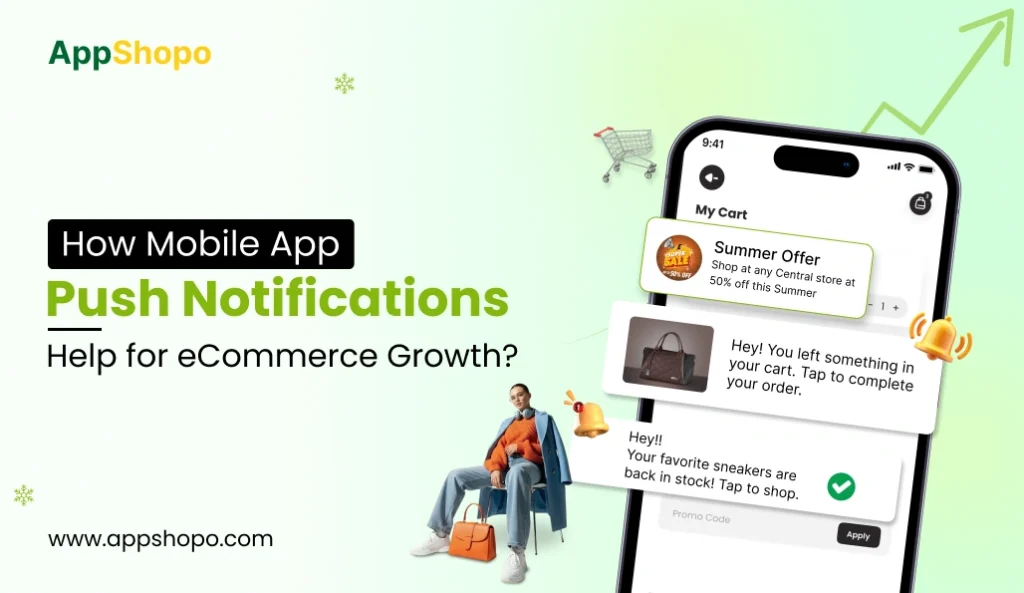
Every eCommerce brand wants the same outcome: more repeat purchases higher engagement and customers who actually come back. Over the years of building mobile apps for online stores, we have seen one tool quietly outperform most growth tactics. Mobile app push notifications.
When brands first ask us about push notifications, they often think of spammy alerts or one-size-fits-all promos. That is not how modern eCommerce apps work. The best notifications feel timely relevant and helpful. They reach customers at the exact moment intent is highest. A price drop. A restock. A reminder that something they liked is still waiting. When done right, push notifications do not interrupt the customer journey. They move it forward.
From fashion and beauty to marketplaces and D2C brands, we have watched push notifications turn passive app installs into active buyers. They reduce cart abandonment. They drive repeat orders. They create habits. In this guide, we will break down how mobile app push notifications actually help eCommerce grow, based on what we see working every day across real stores and real customers.
TL;DR
- Push notifications help eCommerce apps bring users back at the right moments.
- Relevance and timing matter more than sending more messages.
- Personalization and segmentation drive higher engagement and conversions.
- A thoughtful push strategy improves retention and customer lifetime value.
Key Points
- Push notifications give eCommerce apps a direct way to reconnect with users after the first visit or install, without relying on ads, email, or social platforms.
- They increase app engagement by creating clear reasons to return, guiding users toward meaningful actions, and supporting habit-driven usage over time.
- Personalization and segmentation make notifications more effective by aligning messages with user behavior, interests, and buying stages, which leads to higher conversion rates.
- Push notifications play a major role in retention by keeping the brand visible between purchases and reengaging users before inactivity turns into churn.
- A successful push notification strategy depends on relevance, timing, controlled frequency, and continuous performance review rather than volume or aggressive promotion.
- Avoiding common mistakes like overmessaging, poor timing, and generic campaigns helps maintain trust and long-term engagement with users.
What Are Mobile App Push Notifications
Mobile app push notifications are short messages sent directly to a user’s mobile device from an installed app. They appear on the lock screen notification tray or as a banner even when the app is not open. The goal is simple. Deliver timely information that pulls users back into the app.
Unlike email or SMS, push notifications only reach users who have installed the app and opted in to receive alerts. This makes them a permission-based communication channel. Brands are not guessing who might be interested. They are speaking to users who have already shown intent by downloading the app.
Push notifications can be triggered in different ways. Some are scheduled in advance, like promotional announcements or sale reminders. Others are automated and action-based, such as cart abandonment alerts, order updates, price drops, or back-in-stock notifications. These messages are designed to be brief, relevant, and easy to act on with a single tap.
For eCommerce apps, push notifications act as a direct line to customers. They bypass crowded inboxes and social feeds and show up where attention already is. On the phone screen. When used thoughtfully, they help users stay informed, discover products, and return to the app at moments that matter most.
Why Push Notifications Matter for eCommerce Growth
Push notifications matter for eCommerce growth because they help brands stay connected with customers long after the first visit. In a crowded online market, attention is limited and easily lost. Most purchases do not happen on the first session. Push notifications give eCommerce brands a way to continue the conversation without waiting for shoppers to return on their own.
Instead of hoping customers remember the store, push notifications place timely reminders directly on the device they use most. This keeps the brand visible during moments when buying intent is still active.
Here is how push notifications directly support eCommerce growth
- Re-engage users who browse products but leave without taking action.
- Remind shoppers about items left in the cart before interest fades.
- Bring customers back during key moments like restocks or price drops.
- Encourage repeat app opens without relying on ads or search.
Push notifications also simplify the path to purchase. Each message can send users straight to a product page, category, or cart. Fewer steps reduce friction and increase the chances of conversion.
Beyond short-term sales, push notifications contribute to sustained growth by improving core eCommerce metrics.
- Higher repeat visits from existing customers.
- Increased purchase frequency over time.
- Stronger customer lifetime value.
- Better engagement compared to passive channels.
Relevance is another major advantage. Notifications can be triggered by real user behavior such as browsing history, previous purchases, or in-app actions. This keeps messaging useful and timely rather than repetitive or promotional.
Push notifications also offer long-term cost efficiency. Once a user installs the app and opts in, brands gain a direct communication channel.
- No per-message fees like SMS.
- No dependence on social media algorithms.
- Full control over timing audience and messaging.
Used consistently and thoughtfully, push notifications help eCommerce brands grow by strengthening retention, driving repeat revenue, and building lasting customer relationships instead of constantly chasing new traffic.
How Push Notifications Drive Higher App Engagement
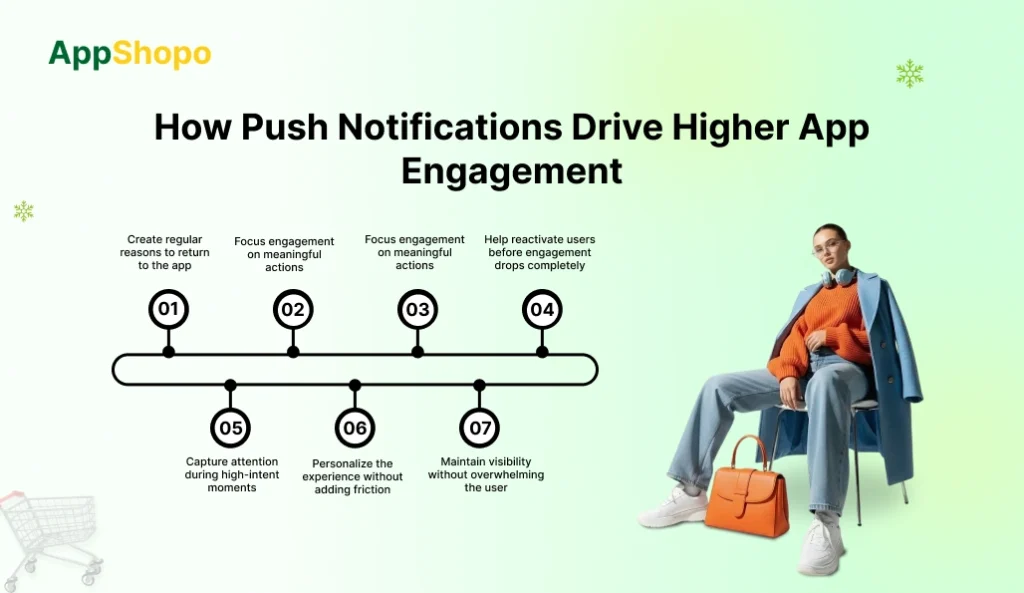
Push notifications play a direct role in shaping how often users open an eCommerce app, how long they stay, and how deeply they interact with it. Engagement does not happen automatically after an app install. Most users need reminders, cues, and reasons to return. Push notifications provide those touchpoints in a way that feels immediate and intentional when done correctly.
Below are the key ways push notifications drive higher app engagement, explained in depth with real-world scenarios that reflect how customers actually behave.
1. Create regular reasons to return to the app
Most shopping apps compete with dozens of other apps on a user’s phone. Without prompts, even interested users forget to return. Push notifications create consistent entry points back into the app by surfacing updates that feel relevant.
For example, a customer browses home decor items and exits the app. A few days later, they receive a notification about new arrivals in the same category. The message gives them a clear reason to open the app again, turning a one-time visit into an ongoing interaction.
Over time, these return visits increase session frequency and keep the app from becoming inactive on the user’s device.
2. Focus engagement on meaningful actions
High engagement is not just about opening the app. It is about browsing products, viewing details, adding items to the cart, and completing purchases. Push notifications can be designed to guide users toward these actions directly.
A notification announcing a limited-time deal can take the user straight to a product or category page instead of the home screen. This removes unnecessary steps and encourages deeper interaction inside the app. Users spend more time browsing and are more likely to take action because the path is clear.
3. Build familiarity and usage habits over time
When notifications are consistently relevant, users begin to associate them with value. This creates a habit loop where opening the app becomes a natural response rather than a conscious decision.
For instance, a health or personal care app sends reminders when frequently purchased items are likely running low. Customers start to rely on the app for timely prompts and return regularly without needing ads or external reminders. Habit-driven engagement is one of the strongest indicators of long-term app success.
4. Help reactivate users before engagement drops completely
Every app experiences a drop in engagement over time. Some users stop opening the app after a few weeks. Push notifications help interrupt this pattern before users disengage entirely.
A shopper who has not opened the app in several weeks may receive a message featuring products related to their past purchases or browsing history. Because the message aligns with previous interest, it feels relevant rather than random. This often results in renewed engagement and prevents the app from being ignored long-term.
5. Capture attention during high-intent moments
Timing plays a major role in engagement. Push notifications are especially effective when triggered by real-time behavior.
A customer adds items to the cart but leaves without checking out. A notification later that day reminds them that the items are still waiting. In some cases, adding urgency like low stock or limited availability, increases the likelihood of returning to the app. These moments align perfectly with existing intent and drive immediate engagement.
6. Personalize the experience without adding friction
Personalized experiences keep users engaged longer because they feel understood. Push notifications can be customized based on browsing behavior, purchase history, and preferences.
A fashion app notifying a customer that their preferred size is back in stock feels helpful rather than promotional. The user opens the app with a specific purpose, spends more time inside, and is more likely to complete a purchase. This kind of engagement builds trust and increases long-term app usage.
7. Maintain visibility without overwhelming the user
Push notifications keep the brand present on the user’s device without competing for attention in crowded inboxes or social feeds. When frequency is controlled and messaging stays relevant, notifications support steady engagement without causing fatigue.
For example, occasional updates about new collections, seasonal launches, or app-only offers remind users why the app is worth keeping. These light-touch interactions encourage regular opens and ongoing engagement without feeling intrusive.
When push notifications are aligned with user behavior, timing, and relevance, they become a central engagement engine. They increase session frequency, extend time spent in the app, and encourage meaningful actions that strengthen the overall relationship between the user and the eCommerce brand.
Personalization and Segmentation for Better Conversions
Personalization and segmentation are what turn push notifications from generic messages into high-converting touchpoints. Sending the same notification to every user rarely works. Customers have different needs, interests, and buying stages. Segmentation makes sure the right message reaches the right user. Personalization makes that message feel relevant and timely.
Together, they directly impact conversion rates by reducing noise and increasing intent.
1. Why segmentation matters in push notifications
Segmentation allows eCommerce brands to group users based on meaningful criteria. This ensures notifications are aligned with where users are in their journey instead of relying on broad messaging.
Common segmentation factors include
- Browsing behavior and product views.
- Purchase history and order frequency.
- App activity levels and engagement patterns.
- Location device type or time zone.
- Customer lifecycle stage, such as new returning or inactive.
When notifications are sent to clearly defined segments, users are more likely to engage because the message matches their context and intent.
2. How personalization improves conversion rates
Personalization adds relevance on an individual level. Instead of sending generic promotions, notifications can reflect what users care about based on their past actions.
Personalized push notifications can
- Reference categories or interests users have already explored.
- Align offers with previous purchase behavior.
- Match timing to when users are most active.
- Focus on intent-driven actions rather than broad promotions.
This approach reduces friction in decision-making. Users do not need to search or browse again to find what matters to them. The message already points them in the right direction.
3. Reduced fatigue and higher trust
Over messaging is one of the fastest ways to lose conversions. Segmentation helps limit notifications to users who are most likely to respond. Personalization ensures those messages feel useful rather than intrusive.
As a result
- Users receive fewer but more relevant notifications.
- Opt-out rates decrease.
- Engagement remains consistent over time.
- Trust in the app communication increases.
This balance is critical for maintaining long-term conversion performance.
4. Better alignment with buying intent
Personalized and segmented notifications align closely with user intent. Instead of pushing products randomly, messages support users at moments when they are already considering action.
This alignment leads to
- Higher tap-through rates.
- More qualified app sessions.
- Stronger add-to-cart and checkout activity.
- Improved conversion efficiency across campaigns.
5. Scalable conversions without added complexity
One of the biggest advantages of personalization and segmentation is scalability. Once rules and triggers are defined, notifications can be sent automatically based on user behavior.
This allows eCommerce brands to
- Maintain consistent relevance at scale.
- Convert more users without increasing manual effort.
- Improve results without increasing notification volume.
Personalization and segmentation are not optional optimizations. They are essential for turning push notifications into a reliable conversion channel. By focusing on relevance instead of reach, eCommerce apps can drive stronger results while delivering a better user experience.
Also Read: Top Shopify Sales Growth Strategies
Improving Customer Retention and Lifetime Value
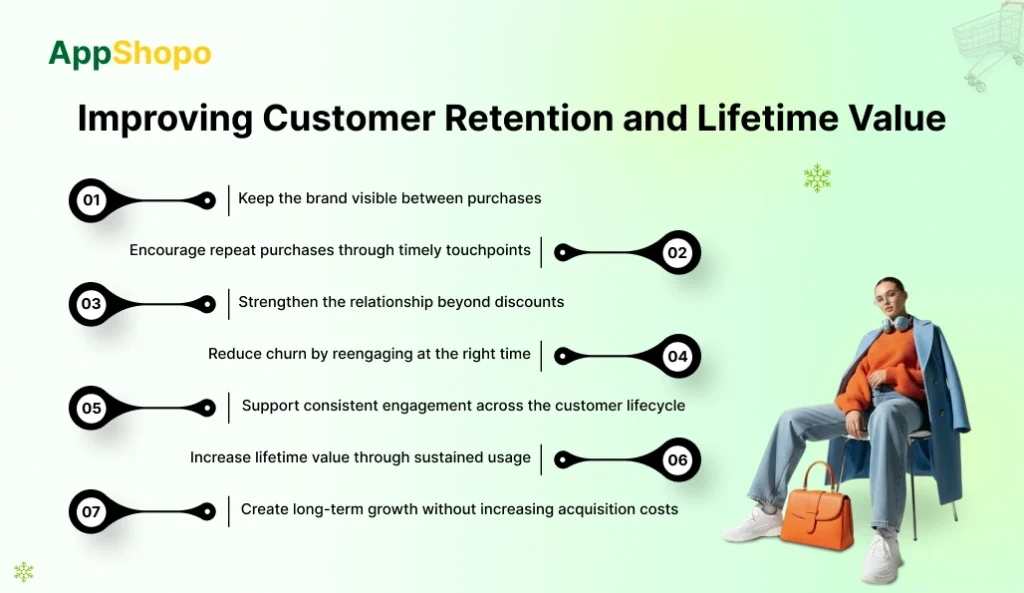
Strong eCommerce growth depends on how well a brand keeps customers coming back. Push notifications play a direct role in improving retention and increasing lifetime value by maintaining consistent, meaningful engagement over time.
1. Keep the brand visible between purchases
Most customers do not shop on a fixed schedule. Without reminders, long gaps between purchases are common. Push notifications help maintain visibility during these gaps by keeping the app present on the user’s device. This consistent exposure increases the likelihood that customers return when a new need arises.
2. Encourage repeat purchases through timely touchpoints
Retention improves when customers are reminded at the right moments. Push notifications can prompt repeat visits based on timing, usage patterns, or purchase cycles. These reminders reduce the chance of customers drifting away and increase the frequency of repeat transactions.
3. Strengthen the relationship beyond discounts
Customer lifetime value grows when engagement goes beyond promotions. Informational and value-driven notifications help build familiarity and trust over time. When users associate the app with useful updates rather than constant sales messages, they are more likely to stay engaged long-term.
4. Reduce churn by reengaging at the right time
Customer churn often happens silently when users stop opening the app. Push notifications help interrupt this pattern by reengaging users before inactivity becomes permanent. This proactive approach improves retention by keeping customers connected even during low activity periods.
5. Support consistent engagement across the customer lifecycle
Different customers require different touchpoints depending on where they are in their journey. Push notifications help maintain engagement from first purchase to repeat orders and beyond. This consistency strengthens long-term relationships and keeps customers active over time.
6. Increase lifetime value through sustained usage
Lifetime value increases when customers interact with the app more often and over a longer period. Push notifications support this by encouraging ongoing engagement, repeat visits, and continued relevance. Over time, these interactions compound into higher overall spending per customer.
7. Create long-term growth without increasing acquisition costs
Retention-driven growth is more efficient than constant acquisition. Push notifications help eCommerce brands focus on maximizing value from existing customers instead of relying solely on new traffic. This approach leads to more predictable revenue and stronger long-term performance.
When used strategically, push notifications become a key retention tool. They help eCommerce brands build lasting relationships, reduce churn, and steadily increase customer lifetime value.
Best Practices for eCommerce Push Notification Strategy
A successful push notification strategy is built on restraint, relevance, and consistency. Shorter, focused practices are easier to execute and deliver better long-term results.
- Prioritize relevance: Send notifications only when there is a clear reason. Messages tied to user behavior and intent perform far better than broad campaigns sent to everyone.
- Get the timing right: Deliver notifications when users are most likely to engage. Timing based on activity patterns and time zones increases open rates and reduces ignores.
- Keep messages simple and direct: Push notifications should be easy to understand at a glance. Clear language and a single action help users respond quickly.
- Control frequency: Too many notifications lead to fatigue and opt-outs. Set limits and focus on consistency rather than volume.
- Use segmentation and personalization: Group users based on behavior and preferences. Personalized messages feel useful and drive higher engagement.
- Rely on automation: Behavior-triggered notifications align with real-time intent and scale better than manual sends.
- Review performance regularly: Track engagement and refine messaging based on what works. Continuous improvement keeps results strong over time.
When these practices are followed, push notifications become a dependable channel for engagement, retention, and conversions in eCommerce apps.
Common Mistakes to Avoid with Push Notifications
Push notifications can quickly lose their impact when basic mistakes are repeated. Avoiding these common issues helps protect engagement, trust, and long-term results.
- Sending too many notifications: Overmessaging leads to fatigue and opt-outs. When users feel overwhelmed, they stop paying attention or disable notifications entirely.
- Using generic messages for all users: One-size-fits-all notifications feel irrelevant. Without segmentation, messages miss intent and fail to drive action.
- Poor timing: Notifications sent at inconvenient hours are ignored or dismissed. Timing should align with user behavior and local time zones.
- Focusing only on promotions: Constant discounts reduce perceived value. Push notifications should also inform, remind, and support the customer journey.
- Ignoring inactive users: Failing to reengage dormant users increases churn. Inactivity should trigger thoughtful reengagement efforts.
- Not linking to a clear destination: Notifications without a direct action cause confusion. Every message should lead users to a relevant screen in the app.
- Failing to review performance: Sending notifications without tracking results leads to repeated mistakes. Regular analysis is essential for improvement.
Avoiding these mistakes helps push notifications remain effective, relevant, and supportive of long-term eCommerce growth.
Final Thoughts
Push notifications work best when they are intentional. They help eCommerce apps stay visible, bring users back at the right moments, and increase repeat purchases without relying on constant ads or discounts. When relevance, timing, and personalization come together, notifications become a steady driver of engagement and retention.
That is where the right app setup makes the difference. At AppShopo, we help eCommerce brands turn their existing websites into mobile apps built for growth. Push notifications are part of the foundation, not an afterthought. With behavior-based triggers and personalization, brands can communicate with customers in ways that feel useful and timely.
If increasing retention and lifetime value is a priority, a strong eCommerce app paired with a smart push notification strategy can deliver consistent, long-term results.

Pankaj Arora
Founder, AppShopo

Pankaj Arora is a technology entrepreneur and the Founder of AppShopo, with over 10 years of experience in helping businesses transform websites into high-performing mobile apps. His expertise spans eCommerce app development, Shopify and WooCommerce integrations, mobile UX optimization, and scalable app delivery. Through AppShopo, Pankaj has enabled brands worldwide to launch fast, reliable Android and iOS apps that drive higher engagement, retention, and mobile sales.