Top 15 Must-Have Shopify Apps to Run Profitable Store
Shopify has set its foot firmly on the edge of the global eCommerce world. However, selling through a Shopify store profitably in 2026 is much more complicated than just the website and ads part. Customers have raised their demands. There is more competition. The marketing costs are up. And the merchants are required to give quick, personalized, and mobile-first experiences at every step.
This is the part where Shopify apps become very important.
With the right Shopify apps, the sellers can automate the operations, enhance the customer experience, and increase the conversion rate. They can also do the customer retention at most margins. However, choosing the wrong apps can lead to store slowing, cost increasing, and operational bottlenecks.
In 2024 alone, Shopify merchants processed US $292.3 billion in transactions, underscoring the massive economic scale and opportunity within the platform.
Based on our team’s hands-on experience working with multiple Shopify merchants across different industries, we’ve identified the 15 must-have Shopify apps that consistently help brands run more profitable, scalable, and future-ready stores in 2026.
- Shopify success in 2026 depends on strategy, not shortcuts
- The right Shopify apps drive automation, retention, and scalability
- Fewer, high-impact apps outperform overloaded app stacks
- Mobile-first experiences are critical for growth
- AppShopo enables long-term, profitable Shopify scaling
- Shopify apps help merchants automate operations and reduce manual workload
- Retention-focused tools improve repeat purchases and customer lifetime value
- Conversion and CRO apps directly increase revenue without extra ad spend
- Performance, scalability, and compatibility matter more than app quantity
- AppShopo supports mobile-first growth, direct engagement, and lower ad dependency
15 Must-Have Shopify Apps to Run a Profitable Store
This compilation of Shopify applications is prepared according to our team’s hands-on exposure to different Shopify projects. The team has scored each application based on its quantifiable effect on revenue increase, retention of customers, and efficiency of operations. Moreover, we did the app compatibility checks regarding the new Shopify requirements, ongoing scalability, performance stability, and reliability, thus making the recommendation pragmatic, tested, and appropriate for business growth that is sustainable in the long run.
Shopify currently supports millions of merchants worldwide, making it one of the most widely adopted eCommerce platforms and increasing the need for performance-driven strategies and app optimization.
| No. | App Name | Category | Why It Matters |
| 1 | AppShopo | Mobile App Builder & Retention | Mobile-first commerce will no longer be optional in 2026 |
| 2 | Klaviyo | Email & SMS Marketing | Owned channels drive the highest ROI |
| 3 | ReConvert | Upselling & Cross-Selling | Post-purchase optimization increases AOV |
| 4 | Judge.me | Social Proof | Trust drives conversions |
| 5 | PageFly | Page Building & CRO | Conversion-focused design wins |
| 6 | Bold Upsell | Upselling | Profitability grows through smarter offers |
| 7 | Recharge | Subscriptions | Predictable revenue is king |
| 8 | ShipStation | Shipping & Fulfillment | Fulfillment impacts customer satisfaction |
| 9 | Zendesk | Customer Support | Support quality affects retention |
| 10 | Gorgias | eCommerce Support | Shopify-native support saves time |
| 11 | Lucky Orange | Analytics & CRO | Data-driven decisions outperform guesswork |
| 12 | PushOwl | Push Notifications | Direct traffic without ad costs |
| 13 | Tidio | Live Chat & Chatbots | Instant support increases conversions |
| 14 | Plug in SEO | SEO | Organic traffic lowers acquisition cost |
| 15 | Matrixify | Data Management | Scale requires clean data |
1. AppShopo

Category: Mobile App Builder & Retention
Why It Matters: Mobile-first commerce will no longer be optional in 2026.
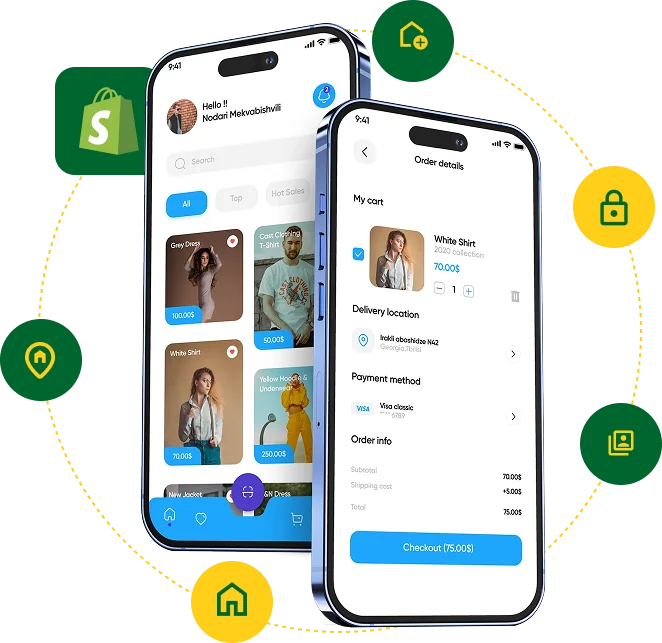
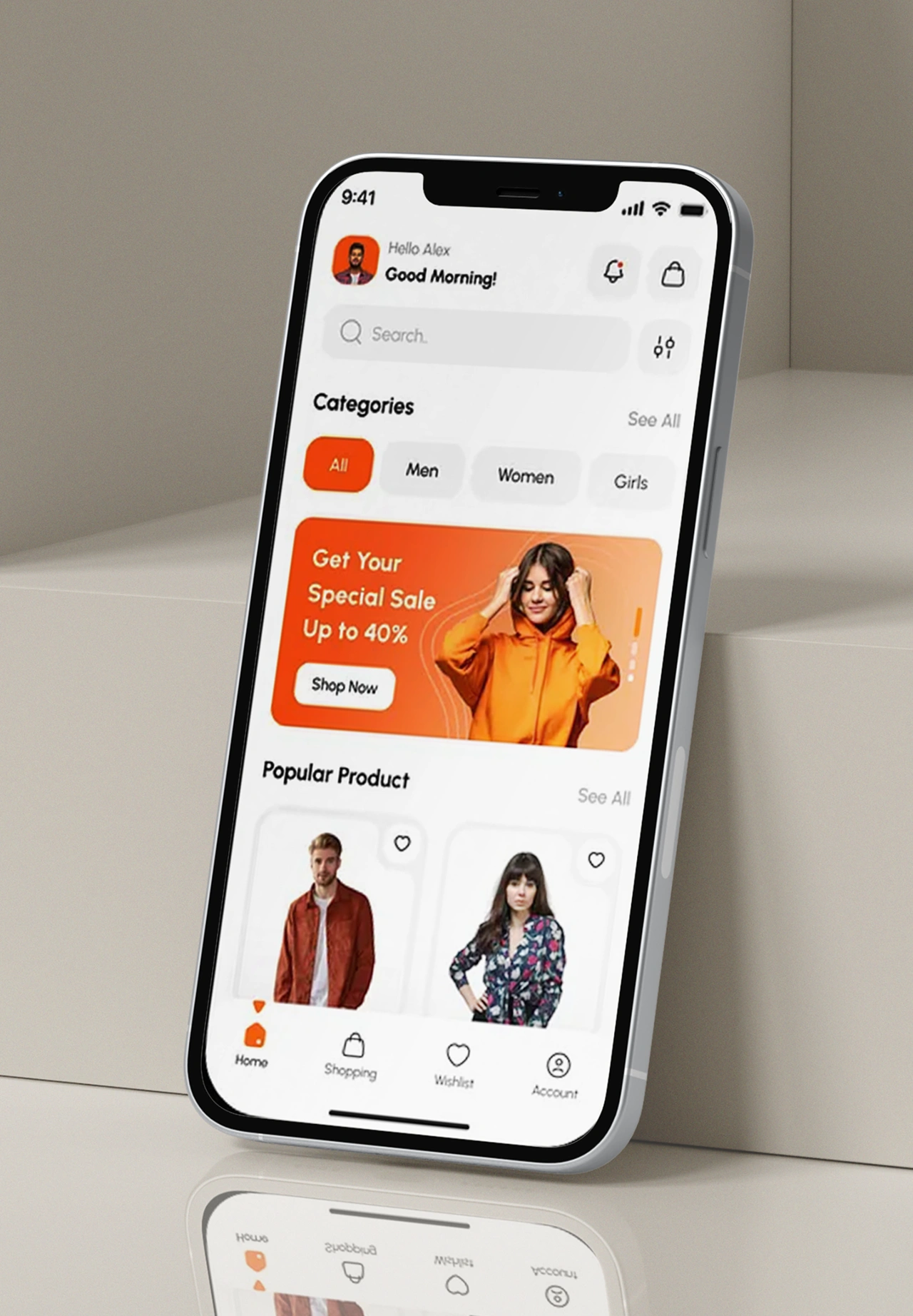
AppShopo supports Shopify store owners in creating mobile apps that work great and can be managed with no technical skills. By concentrating on the retention of customers, repeat sales and direct customer communication through push notifications and pleasing mobile experiences, it becomes the right solution for brands that would like to employ a mobile-first commerce strategy by 2026.
- Native mobile app for Android & iOS
- Real-time Shopify sync
- Push notifications for retention
- Faster checkout and smoother UX
- Reduces dependency on paid ads
Statista reports that mobile commerce now accounts for more than 60% of global eCommerce sales, making mobile-first strategies and dedicated shopping apps essential for Shopify merchants in 2026.
2. Klaviyo

Category: Email & SMS Marketing
Why It Matters: Owned channels drive the highest ROI.
Klaviyo gives Shopify merchants the ability to create extremely individualized email and SMS campaigns based on customer activity, buying history, and forecasting. It helps companies get back lost customers, boost customer loyalty, and achieve higher ROI through channels that they own for marketing instead of relying on expensive ads.
- Advanced segmentation
- Automated flows (abandoned cart, win-back)
- Shopify-native integration
- Revenue attribution reporting
- Strong deliverability
Also Check: Top 15 Best Shopify App Builders
3. ReConvert

Category: Upselling & Cross-Selling
Why It Matters: Post-purchase optimization increases AOV.
ReConvert makes the post-purchase experience better for Shopify sellers to increase their average order value. It gets more revenue from the already interested customers by modifying the thank-you pages and placing the targeted upsells right after the checkout without any additional traffic or ad costs.
- Post-purchase upsells
- One-click offers
- Birthday & reorder incentives
- Custom thank-you pages
- Boosts AOV without ads
4. Judge.me

Category: Social Proof
Why It Matters: Trust drives conversions.
Judge.me enables Shopify shops to earn trust and credibility by gathering and showcasing real customer reviews. Among its features are photo and video reviews, automatic review requests, and widgets that are good for SEO, which all combine to make social proof stronger while still being economical and very adaptable for developing companies.
- Photo & video reviews
- Automated review requests
- SEO-friendly widgets
- Affordable pricing
- High customization
5. PageFly

Category: Page Building & CRO
Why It Matters: Conversion-focused design wins.
PageFly gives Shopify retailers the power to build perfectly converting landing pages and shop sections with no coding involved. It enhances the user experience for brands, allows faster launches of campaigns, and optimizes the traffic of main store pages through mobile optimization, fast-loading layouts, and CRO-related templates.
- Drag-and-drop builder
- Mobile optimization
- Pre-built CRO templates
- Fast page load
- Custom sections
Read Also: How to Turn Shopify Store into a Mobile App
6. Bold Upsell

Category: Upselling
Why It Matters: Profitability grows through smarter offers.
Bold Upsell is a tool for Shopify traders that helps to make their businesses more profitable by presenting suitable upsell and cross-sell offers when they are needed. It utilizes a set of flexible rules combined with smart suggestions to improve the average order amount while making the shopping process smooth, contextual, and customer-friendly throughout the checkout funnel.
- AI-powered upsells
- Product recommendations
- Flexible display rules
- Works across checkout funnel
- Easy integration
7. Recharge

Category: Subscriptions
Why It Matters: Predictable revenue is king.
Recharge is an easy-to-use tool that Shopify merchants can utilize to create and manage subscription products. Besides that, it features recurring billing, self-service portals for customers, and churn analytics, which all contribute to the prediction of revenue, retention improvement, and the creation of lasting relationships with customers through flexible subscription models.
- Subscription billing
- Customer portal
- Analytics & churn insights
- Shopify checkout integration
- Scales with growth
8. ShipStation

Category: Shipping & Fulfillment
Why It Matters: Fulfillment impacts customer satisfaction.
ShipStation simplifies shipping and fulfillment for Shopify merchants by centralizing multiple carriers into one platform. With automation rules, real-time tracking, and international shipping support, it helps reduce fulfillment errors, speed up dispatch, and improve overall post-purchase customer satisfaction.
- Multi-carrier support
- Automation rules
- Order tracking
- International shipping
- Faster dispatch
9. Zendesk

Category: Customer Support
Why It Matters: Support quality affects retention.
Zendesk offers a single platform for customer support to Shopify sellers, which combines the management of queries from email, chat, and social media. With its help, teamwork in support can sort out problems very quickly through automation, SLA monitoring, and in-depth reporting, which in turn keeps up the quality of service and increases customer loyalty on a large scale.
- Unified inbox
- Automation & macros
- SLA tracking
- Scalable for growth
- Detailed reporting
Also Read: Top Shopify Sales Growth Strategies
10. Gorgias

Category: eCommerce Support
Why It Matters: Shopify-native support saves time.
Gorgias is a Shopify-native helpdesk built specifically for eCommerce support teams. By displaying order and customer data directly inside support tickets, it enables faster responses, automation, and revenue-focused insights, turning customer support into a powerful retention and conversion channel.
- Order data inside tickets
- Automation rules
- Live chat integration
- Revenue-based metrics
- Faster response times
11. Lucky Orange

Category: Analytics & CRO
Why It Matters: Data-driven decisions outperform guesswork.
Lucky Orange provides to Shopify merchants a better understanding of user interaction done via heatmaps, session recordings, and funnel analyses. These analyses reveal the critical areas where customers have difficulties; hence, the stores can change their design, increase revenue, and make data-driven decisions rather than relying on intuition.
- Heatmaps & recordings
- Funnel analysis
- Real-time insights
- Conversion optimization
- Easy setup
12. PushOwl

Category: Push Notifications
Why It Matters: Direct traffic without ad costs.
PushOwl provides a means for Shopify sellers to draw back visitors through browser push notifications. The tool works best for recovering abandoned carts and promoting items, as it gives the notifications a high open rate without the need for email or paid ads, making it a very cheap repeated traffic channel.
- Abandoned cart reminders
- Campaign automation
- High open rates
- No email dependency
- GDPR-compliant
Read Also: Shopify Mobile App Builders: Best Budget-Friendly Options
13. Tidio

Category: Live Chat & Chatbots
Why It Matters: Instant support increases conversions.
Tidio combines live chat and AI-powered chatbots to deliver instant customer support for Shopify stores. It helps answer customer queries, guide shoppers during purchase decisions, and automate FAQs, improving conversion rates and customer satisfaction while reducing support team workload.
- AI-powered chatbots
- Live chat support
- Messenger integration
- Automated FAQs
- Easy Shopify setup
14. Plug in SEO

Category: SEO
Why It Matters: Organic traffic lowers acquisition cost.
Plug in SEO helps Shopify merchants identify and fix on-page SEO issues through automated audits and alerts. By addressing broken links, missing meta tags, and best-practice gaps, it improves organic visibility and helps reduce long-term customer acquisition costs through search traffic.
- SEO audits
- Broken link detection
- Meta tag optimization
- Best practice alerts
- Simple reporting
15. Matrixify

Category: Data Management
Why It Matters: Scale requires clean data.
Matrixify makes bulk data management easier for Shopify stores with large catalogs or complex operations. It allows the mass import, export, and migration of products, customers, and orders, which saves time, minimizes mistakes, and supports seamless scaling as the business expands.
- Bulk product updates
- Order & customer exports
- Store migration support
- CSV & Excel compatibility
- Time-saving workflows
How to Choose the Right Shopify Apps for Your Store
The choice of the optimal Shopify apps has a huge effect on the store’s performance and profit. So, rather than going for many tools, the sellers must focus on the apps that are really perfect for their business objectives, operational needs, and growth strategies. A well-thought-out decision not only ensures better performance but also leads to lower costs and gives the advantage of scalability in the long run.
- Business model alignment: Each type of business model dictates the app functionalities that would be suitable to it. DTC stores prioritize their marketing and retaining customers, B2B stores require quick and easy ordering, and subscription brands necessitate recurring payment and churn management features.
- Growth stage consideration: The simplest, least expensive apps are the most advantageous for startups, while the larger-scale stores require advanced automation, analytics, and integrations that can manage increased traffic and order volumes.
- Performance impact vs. cost: The app should provide an observable value in terms of revenue, retention or efficiency. High-priced or poorly optimized apps that decrease store speed can have a bad impact on conversions as well as user experience.
- Long-term scalability: Opt for the apps that are capable of expanding along with your business. Scalable apps save on replacement costs, cut down on technical debt, and aid in future growth without interrupting operations.
Statista data shows that Shopify holds around 10% of the global eCommerce software market, reinforcing why merchants must invest in scalable, high-performance apps to stay competitive.
Also Read: Shopify Seasonal App Design Strategies That Convert
Conclusion
To wrap it up, the creation of a lucrative Shopify store in 2026 involves more than just the placing of products and advertising. The merchants have to be focused on a long-term strategy. using automation and giving great customer service at every interaction. The proper mix of Shopify applications can make the work more efficient, enhance the sales, and keep the customers loyal, all the while making the business scalable and effective.
Amongst all the growth tools, AppShopo is the one that truly reflects the mobile-first success. The transformation of Shopify stores into highly effective mobile apps by AppShopo results in quicker checkouts, customer engagement via push notifications, and repeat purchases without increasing ad dependency, all this at a faster pace. For the merchants that want to secure their Shopify business for the future and develop customer relationships, AppShopo is the name to reckon with for sustainability, and thus, the long-term profits will be unshakeable.
FAQs
1. How many apps should a store use at the most?
Between 10 and 20 app installations are usually recommended for profitable Shopify stores; however, it all depends on the quality of the apps chosen. The apps thus picked will be the ones to provide the necessary functionalities and not the ones to overburden the store. So, there will be smooth store performance management, easy store management, and ROI measurable from every installed app.
2. Would you say that the use of Shopify apps produces any slowdown in quite a dynamic site’s performance?
The thing is that apps of Shopify do impact negatively on performance if they are not well optimized and if they are not needed. Choosing trustworthy apps, being aware of no-duplicity, and doing a regular performance check are the main factors that keep up very quick loading times and a good shopping experience for customers.
3. Can you please say if paid Shopify apps are worth the price?
The majority of times, paid Shopify apps are worth the cost because they carry out the primary functions of the businesses, and thus, if a customer is lost, his/her chance of coming back to the store is reduced; the conversion rates go down, and the store is eventually wasting time. When strategically selected, they provide measurable returns that are greater than their monthly subscription costs; thus, in other words, they are worth the investment.
4. Would you recommend new stores to install all apps as soon as they launch?
Not really, new Shopify stores should not install all apps at launch Still, beginning with the indispensable apps helps in keeping the store simple and performing at its best. then, the more tools can be introduced according to the rising traffic and the complexity of operations.
5. When should the next time be that a store goes for a Shopify app review?
Every three to six months is the time period that each Shopify app should be annually reviewed to see if it is still delivering value. Regular reviews assure the withdrawal of apps with low performance, cost reduction, and performance improvement, and thus, the store remains ready for growth and is not only that but also optimized.

Pankaj Arora
Founder, AppShopo

Pankaj Arora is a technology entrepreneur and the Founder of AppShopo, with over 10 years of experience in helping businesses transform websites into high-performing mobile apps. His expertise spans eCommerce app development, Shopify and WooCommerce integrations, mobile UX optimization, and scalable app delivery. Through AppShopo, Pankaj has enabled brands worldwide to launch fast, reliable Android and iOS apps that drive higher engagement, retention, and mobile sales.