How to Launch Shopify Fashion & Apparel Mobile App
The fashion industry is changing at a very fast pace. In fact, customers of today expect fast service, personalized offers, and handy mobile experiences all the time. Visiting collections, saving favorites, following the latest trends, and making repeat purchases are now mainly done via smartphones. For modern brands, this change has made them realize one thing only: a website is no longer sufficient. A mobile app for fashion and apparel has become a vital source of brand expansion.
A dedicated fashion and apparel app powered by Shopify enables brands to deliver a mobile-first shopping experience, which is quicker, more attractive, and more personalized than a mobile web. Fashion and apparel brands can re-energize their customer base through their Shopify mobile app, which is a significant factor in successive purchases and, thus, an increase in customer loyalty that spans over the long run. This is mainly done by the brands incorporating features such as real-time product updates, easy checkout, push notifications, and app-exclusive offers into their fashion Shopify mobile app.
For this reason, this blog outlines a step-by-step approach based on our team’s experience converting eCommerce stores into high-performing Shopify mobile apps.
The blog explains why fashion brands need mobile apps and covers every step of turning a Shopify store into a successful fashion app, from goal setting and store preparation to app design, product syncing, launch and promotion, helping brands increase conversions, repeat purchases, and customer retention.
- Fashion shopping is mobile-first; apps outperform mobile websites consistently.
- Shopify-powered apps increase repeat purchases and customer loyalty.
- Push notifications drive engagement without ongoing advertising costs.
- Mobile apps deliver faster checkout and higher conversion rates.
- AppShopo simplifies launching scalable fashion apps on Shopify.
- Fashion and apparel apps enable faster browsing, personalized experiences, and repeat purchases compared to mobile websites.
- Shopify mobile apps sync products, inventory, pricing, and orders in real time, ensuring operational consistency across all channels.
- Push notifications act as a direct, cost-effective marketing channel for launches, restocks, sales, and exclusive offers.
- Well-designed fashion apps increase customer retention, average order value, and lifetime value while reducing paid ad dependency.
- AppShopo helps fashion brands launch high-performance Android and iOS apps quickly without complex development or high costs.
Why Fashion and Apparel Brands Are Moving to Mobile Apps
The fashion industry thrives on visuals, is very much influenced by trends, and is fundamentally made up of repeat customers. Customers of today require instant access to new collections, easy browsing, and personalized recommendations, all of which can be done via their mobile devices. This change in consumer behavior is the main reason why brands are choosing to have a Mobile App for Fashion and Apparel in addition to their websites.
An exclusive fashion and apparel app gives brands the opportunity to offer a seamless, mobile-first shopping experience that attracts customers even after their first purchase. Fashion and apparel brands are in a position to extend speed, convenience, and personalization to their customers at each interaction if they have a Shopify mobile app.
Key reasons fashion brands are adopting mobile apps:
- The shift toward mobile apps is also backed by where the fashion industry is heading next. The numbers make the direction clear.
- Mobile commerce is projected to account for over 60 percent of global e-commerce sales by 2027, with fashion leading adoption due to frequent browsing and impulse buying behavior.
- Fashion remains the largest ecommerce category worldwide, expected to surpass USD 1 trillion in online sales by 2028, with mobile apps driving a major share of that growth.
- According to Google, 53 percent of mobile users abandon sites that take longer than three seconds to load, which explains why brands are prioritizing apps over mobile web experiences.
- App users convert up to three times higher than mobile web shoppers, especially in retail and fashion, where repeat visits matter.
- By 2026, AI driven personalization is expected to influence over 70 percent of fashion purchases, something that works far more effectively inside mobile apps than on websites.
Fashion brands that rely only on mobile websites are leaving speed, repeat purchases, and long-term loyalty on the table. Mobile apps are becoming the primary channel for growth, not a secondary add-on.
Also Read: Seasonal App Design Strategies Every Shopify Store Needs
What Is a Shopify Mobile App for Fashion and Apparel?
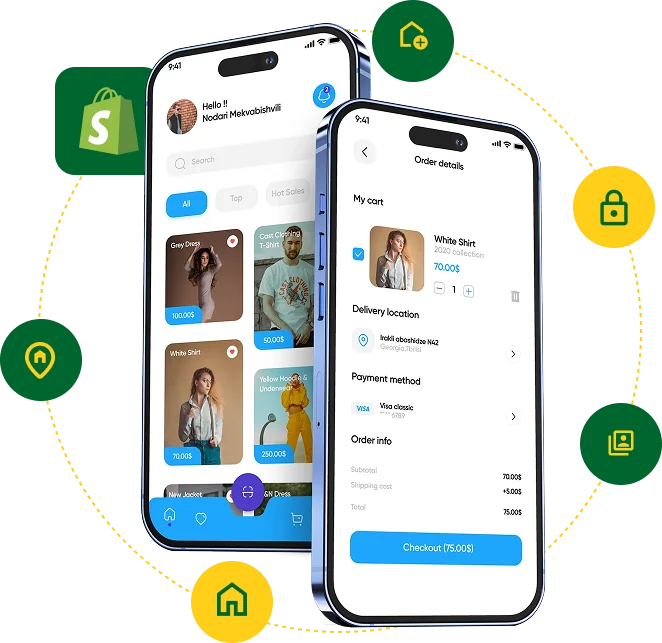
The Shopify Mobile App for Fashion and Apparel is a dual-brand app designed for both Android and iOS devices that immediately links to your Shopify store. The application also acts as a bridge between all channels so that the shopping experience is perfect and uniform everywhere, thanks to the real-time products, collections, stock, prices, and order synchronization.
The app is similar to a focused fashion and clothing app, which customers can use to shop for their needs in a very fast, clear, and visually pleasant way. The entire app is controlled by the Shopify backend for retailers; thus, it is very convenient and efficient to update, manage the stock, and process the orders.
Being so closely integrated, fashion retailers are enabled to offer a mobile-first experience while still retaining their control over operations, branding, and customer data via Shopify.
Step-by-Step Guide to Launching a Fashion and Apparel App
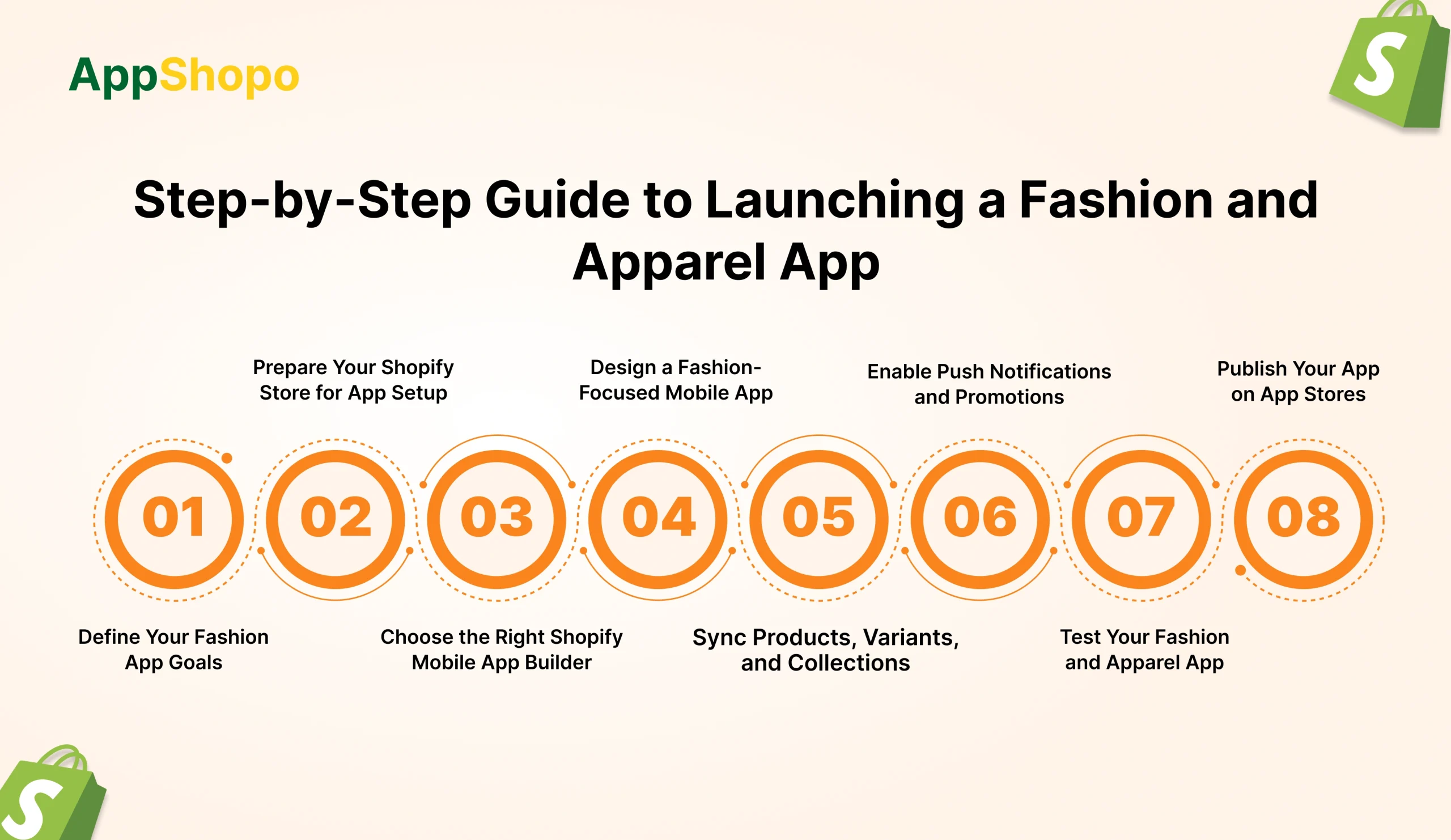
This step-by-step approach is based on our team’s experience converting fashion and apparel eCommerce stores into high-performing mobile apps that drive conversions, repeat purchases, and customer retention.
Step 1: Define Your Fashion App Goals
Every successful fashion and apparel app begins with clearly defined objectives. Before development starts, brands have to find out the principal use of their Fashion and Apparel Mobile App. If the major objective is to raise repeat purchases, advertise collections, or build loyalty, then having lucid goals will decide the app look, features, user journeys, and marketing strategies employed, thus making the business effect both measurable and sustainable.
- Increase repeat purchases
- Launch new collections effectively
- Offer app-exclusive deals
- Strengthen customer loyalty
- Align app strategy with business goals
Step 2: Prepare Your Shopify Store for App Setup
Your Shopify store is the base for your mobile app; thus, good planning is vital. Synchronization is made easy, and the shopping experience is made smooth by optimizing the product data, images, variants, and collections. A well-crafted store will curb errors and enhance operational effectiveness, while a store manager will offer a sufficient street experience on both web and mobile channels.
- Optimize product titles and descriptions
- Set accurate size and color variants
- Upload high-quality, mobile-friendly images
- Organize collections clearly
- Ensure stable checkout and payments
Step 3: Choose the Right Shopify Mobile App Builder
Choosing the right Shopify mobile app builder is a pivotal factor in determining the success of your app. App builders simplify the development process, reduce costs, and provide essential features required by fashion brands. By means of real-time Shopify sync, scalable architecture, and inbuilt marketing tools, apps like AppShopo enable brands to create top-performing fashion and apparel apps without the need for intricate technical management. A strong performance, scalability, and long-term growth are guaranteed by the right decision.
- Real-time Shopify synchronization
- Fashion-focused layouts
- Push notification support
- Android and iOS compliance
- Long-term scalability
Step 4: Design a Fashion-Focused Mobile App
Design is the main factor that determines the success of any fashion and apparel app. Customers choose a product mainly by looking at the pictures, and also they check navigation and experience. A well-organized, user-friendly, and brand-identical design not only enhances the customers’ trust and increases the app’s usability but is also a very powerful marketing tool as conversion rates and customer satisfaction get a direct uplift.
Design best practices:
- Minimal, product-first layouts
- Large, high-quality visuals
- Simple and intuitive navigation
- Quick add-to-cart options
- Consistent branding elements
Step 5: Sync Products, Variants, and Collections
Accurate and up-to-the-minute real-time updates are the main factors that prevent your mobile app from having product information that differs from Shopify. Basically, a correct syncing can be a great customer experience booster, as it keeps the problem of overselling at bay, customer frustration at a minimum level, and brand credibility at a high level. When products, inventory, and collections are updated automatically, shoppers get a consistent and seamless shopping experience.
- Products update in real time
- Sizes and colors sync accurately
- Inventory reflects livestock.
- Collections remain consistent
- Orders sync without delays
Step 6: Enable Push Notifications and Promotions
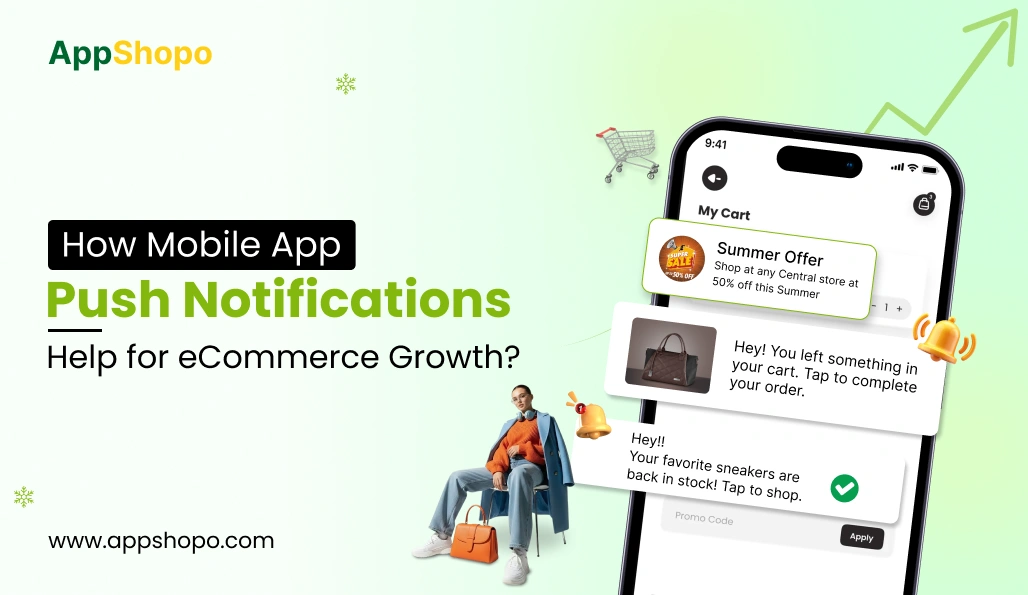
Push notifications are definitely the top tool that a Mobile App for Fashion and Apparel can have at its disposal. With the help of such means, brands can talk to customers directly, market quick deals, and thus, create a cycle of customers coming back for more. In fact, push notifications multiplied by strategy become a source of sales increases without the necessity of spending money on advertising.
- New arrival announcements
- Seasonal sale alerts
- Flash discount promotions
- Back-in-stock notifications
- App-exclusive offers
Step 7: Test Your Fashion and Apparel App
Testing is the process that ensures your Shopify mobile app functions properly in all kinds of devices and in user scenarios. Extensive testing allows us to find user experience problems, software bugs, and weak points in the app’s performance even before the release. It’s a crucial stage for providing a frictionless first experience and, thereby, preventing bad feedback.
- Browsing and checkout flow
- Size and color selection
- Login and account creation
- Payment and order confirmation
- App speed and stability
Step 8: Publish Your App on App Stores
Publishing your app officially introduces your fashion and apparel app to customers. A well-planned launch strategy helps maximize visibility, drive early downloads, and encourage engagement. Combining app store publishing with marketing efforts ensures strong adoption from day one.
- Submit to Google Play and App Store
- Add app banners on your website
- Promote via email and SMS
- Share on social media channels
- Offer app-only launch incentives
Read Also: B2B Ecommerce Growth: Why Mobile Apps Matter
Benefits of Launching a Fashion and Apparel App with Shopify
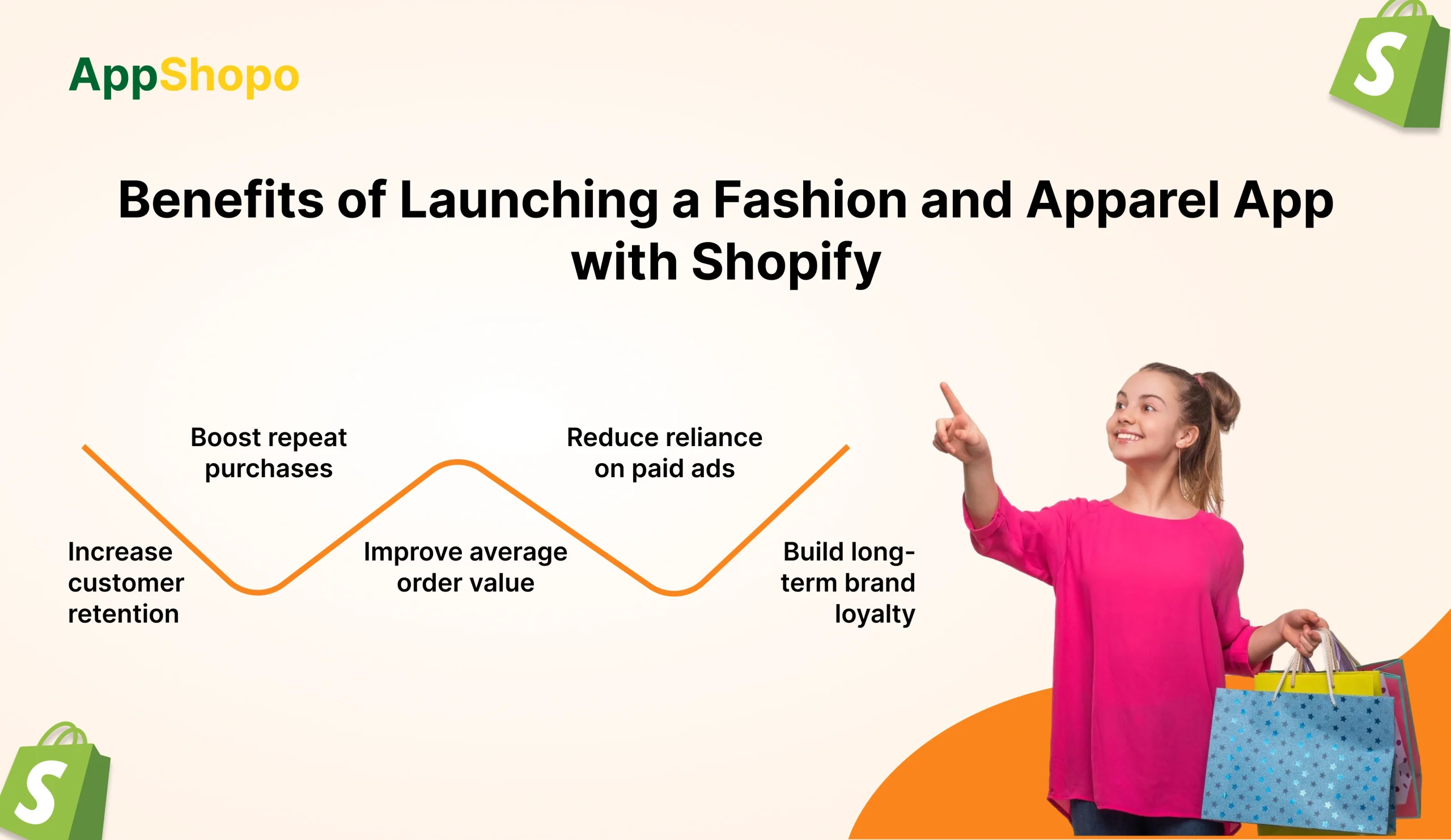
Fashion and Apparel brands are changing their customer communication methodologies with the help of the Shopify Mobile App, which is a direct communication channel that surpasses the limitations of normal websites. However, a customized fashion and apparel app is made to attract customers, increase sales, and ultimately facilitate the brand to become bigger.
- Increase customer retention: With a mobile app, your brand is within reach of the customers on their gadgets, thus giving them the freedom of coming back at their convenience. Features like wishlists, saved preferences, and push notifications keep customers in the loop and eager to make repeat visits for a long time.
- Boost repeat purchases: By using a Mobile App for Fashion and Apparel, reordering becomes a matter of few steps, as the App offers you faster browsing, quick checkout, and personalized product recommendations and thus increases purchase frequency.
- Improve average order value: With the help of apps, it is possible to facilitate the promotion of bundles, cross-sell the related items, and create customers’ interest in the advertising of the latest collections; thus, customers are getting more and more encouraged to add additional items to their carts.
- Reduce reliance on paid ads: Brands communicate with users directly through push notifications at no extra cost, thus allowing them to win over customers again and keep the constant investment in paid advertising at a minimum.
- Build long-term brand loyalty: A branded fashion and apparel app is a platform that deliver a consistent, high-end shopping experience resulting in trust, emotional connection, and brand recall, which are the primary characteristics of loyalty and these increase with time.
Ultimately, Shopify mobile apps help fashion brands move beyond one-time transactions and build lasting customer relationships that drive sustainable growth.
Essential Features of a Fashion and Apparel Mobile App
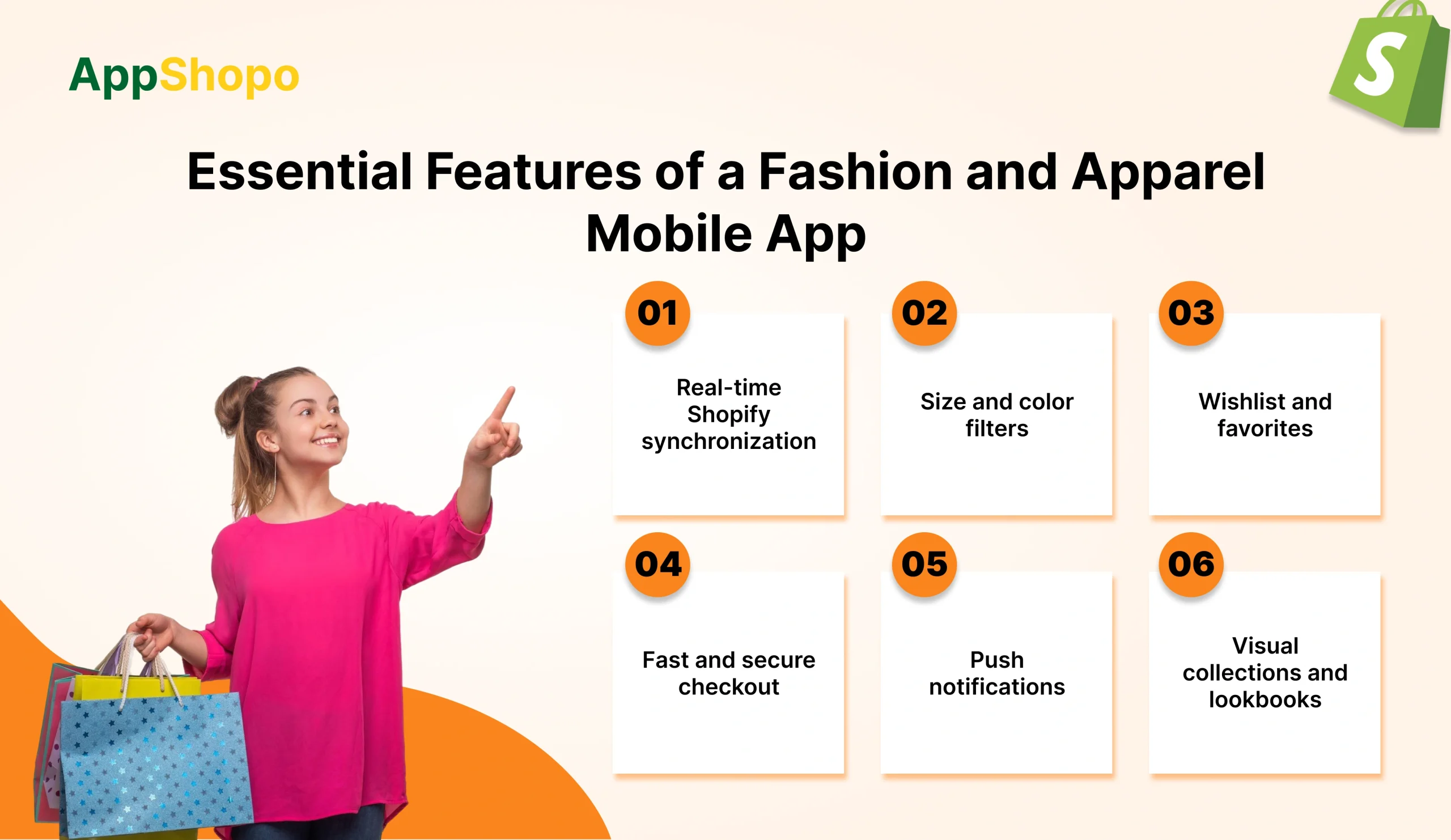
A successful Mobile App for Fashion and Apparel must be designed around convenience, speed, and visual appeal. The right features not only enhance the shopping experience but also directly impact engagement, conversions, and customer loyalty.
- Real-time Shopify synchronization: Instant syncing ensures products, pricing, inventory, and orders are always accurate across the app and your Shopify store, preventing stock issues and maintaining customer trust.
- Size and color filters: Easy-to-use filters help shoppers quickly find the right fit and style, reducing browsing time and minimizing cart abandonment.
- Wishlist and favorites: Allowing users to save products encourages repeat visits and makes it easier for customers to return when they are ready to purchase.
- Fast and secure checkout: A streamlined checkout process with secure payment options reduces friction and increases conversion rates.
- Push notifications: Push notifications enable direct communication for promotions, new launches, restocks, and personalized offers, driving consistent engagement.
- Visual collections and lookbooks: Curated collections and lookbooks showcase products creatively, helping customers discover styles and complete outfits effortlessly.
Together, these features improve product discovery, simplify purchasing decisions, and significantly increase conversions in a fashion and apparel app.
Also Read: 15 Best Website to App Conversion Tools to Use
Examples of the Most Expensive Fashion Brands Using Apps
Luxury fashion brands are spending more and more money on mobile apps, which enable them to offer exclusivity, personalization, and top-notch digital experiences. For luxury brands, a Mobile App for Fashion and Apparel is more than just a means of selling; it is a way of expressing the brand.
1. Louis Vuitton
In 2011, Louis Vuitton first made a move towards mobile engagement by introducing an official iPhone app. With its mobile app, Louis Vuitton lifts the customer’s shopping journey to a luxurious level through product previews, exclusive release, and brand storytelling, which are not accessible anywhere else. Customers have access to collections, runway highlights, and the excellence of the work, and simultaneously, they can also avail of simple browsing and checkout, which is in line with the brand’s luxury positioning and worldwide prestige. Louis Vuitton went ahead to make its official mobile app available in 2011.
2. Gucci
Gucci launched its mobile app initiatives around 2017. The Gucci fashion app represents a combination of luxury retail and digital innovation. It comes with virtual try-ons, editorial storytelling, curated collections, and app-exclusive releases. The app is a strong instrument for the brand to interact with the customers, as it combines creativity, personalization, and commerce and thus gives the brand an opportunity to create emotional bonds while still keeping its audacious and high-fashion personality. Gucci launched its mobile travel and brand engagement app initiatives around 2017, reflecting its early mobile strategy.
3. Chanel
Chanel expanded its official mobile app presence during the 2010s. The Chanel mobile app is all about the elements of elegance, storytelling, and brand heritage instead of a hard sell. The users are allowed to access the runway shows, beauty and fashion collections, and the content from behind the scenes. The application is a tool that not only supports the brand in its efforts to engage with the customers but also serves to remind them of Chanel’s exclusiveness by offering a first-class luxury digital experience. Chanel’s official mobile presence expanded in the 2010s as luxury brands embraced mobile apps (the precise launch year is not commonly documented).
4. Hermes
Hermès released its mobile app around 2014. Hermès has made its mobile application to show the product’s making, the very few products you can buy, and the carefully selected collections. The app is nothing but the brand’s legacy and it mirrors the brand with its focus on simplicity, elegance, and exclusivity. The luxury of limited access and an impeccable display are how Hermès is not only winning over customers’ trust in the short term but also building brand loyalty in the long run. Hermès was among the early luxury brands releasing interactive mobile experiences by the mid-2010s, including unique app offerings around 2014.
5. Dior
Dior launched its official fashion mobile app in the late 2010s. The Dior fashion app is quite like a blend between high-end shopping and an immersive storytelling experience. The customers may avail themselves of the opportunity to view the fashion shows, the behind-the-scenes, and the very first look at the collection; also, they may execute the purchases quite effortlessly from their phones. The application supports the brand in delivering personalized updates and facilitating exclusive access to the customers, which is a method of maintaining the brand’s prestige and enhancing customer loyalty.
6. Prada
Prada introduced its official mobile app in the late 2010s. Prada’s mobile application is a reflection of its minimalist luxury style by means of a neat design and carefully selected content. The app is all about launching new collections, editorial storytelling, and exclusive releases. By giving the utmost importance to visual clarity and top-class presentation, Prada leverages its app as a platform to not only strengthen the brand but also to provide a polished fashion experience to the customers.
How to Promote Your Fashion and Apparel App After Launch
Just creating a mobile app for fashion and apparel isn’t enough. Fashion brands need to be always in work mode, pushing their app to the customers via all possible touchpoints if they want to see the downloads, engagement, and long-term retention going up. Regular promotion is the key to making your fashion and apparel app a vital shopping channel rather than just another optional one.
- App banners on your Shopify store: Help visitors understand clearly that an app is available for download by using banners with the app download on your homepage, product pages, and checkout screens. Highlight features like quicker checkout, app-only offers, or access to collections prior to sale to make users aware of the advantages of the installation and so motivate them to do it.
- Email and SMS campaigns: Leverage your customer base to spread the news about the app launch. Provide download links, describe the app’s value, and advertise exclusive offers to attract immediate adoption.
- Social media promotions: Present your app everywhere on Instagram, Facebook, and other platforms where you have reels, stories, and posts. Talk about the app features, give a few examples of the app-exclusive discount, and let the users have the direct download links.
- App-exclusive discounts: Help customers by offering them special pricing or early access to sales only available through the app. The exclusivity causes the need for the app to be downloaded right now if the customer wants to participate in the sale or get the discount.
- Incentives for first-time app users: New app users should be given a welcome discount, loyalty points, or free shipping. These incentives are the ones which push the initial purchases, and at the same time, they help create the notion of the app among the users from the very beginning.
Regular promotion on the different digital channels, fashion brands will be able to maximize app downloads, increase customer engagement and convert their Shopify mobile app for fashion and apparel into a sustainable source of revenue.
Also Read: How to Convert Shopify Store to Mobile App: Brief Guide
How a Shopify Mobile App Drives Growth for Fashion Brands
A Shopify Mobile App for Fashion and Apparel is no different from a long-term growth engine other than just being another sales channel. Customers through mobile apps remain in your branded ecosystem, which results in consistent engagement that websites and third-party platforms cannot achieve.
Mobile applications are not only more appealing but also more practical since they allow faster access to items, assortments, and reorders; thus, customers can even do new arrivals browsing, saving, and buying in just a few clicks. Hence, conversion rates and purchase frequency get higher.
Using personalized experiences, fashion companies can recommend their products to the customers according to their browsing patterns, previous buys, and tastes. This level of personalization renders the customer more important, elevates the average order value, and strengthens the bond with the customer.
With the help of push notifications and direct communication, brands get a chance to inform customers immediately and individually about the launches, sales, and restocks, confirming that there is no need to depend much on paid ads. As a result, customer acquisition costs go down while lifetime value increases.
The fashion brands that combine these features of speed, personalization, and owned communication channels are the ones that will be able to achieve sustainable growth without continuously increasing advertising budgets.
How AppShopo Helps Fashion Brands Launch High-Performance Mobile Apps
While global luxury brands invest heavily in custom-built mobile apps, modern fashion businesses no longer need complex or expensive development to achieve similar results. AppShopo makes it easy for fashion and apparel brands to launch powerful, scalable Shopify mobile apps without technical complexity.
AppShopo is built specifically for Shopify merchants who want to deliver fast, visually rich, and conversion-focused mobile experiences. With real-time Shopify synchronization, fashion-friendly layouts, and built-in push notification tools, brands can engage customers, promote collections, and drive repeat purchases directly through their app.
Whether you are a growing fashion label or an established brand, AppShopo enables you to:
- Launch Android and iOS apps quickly
- Maintain full brand control and consistency
- Reduce dependency on paid advertising
- Improve retention and customer lifetime value
With AppShopo, fashion brands can turn their Shopify store into a high-performing Mobile App for Fashion and Apparel that supports long-term growth and customer loyalty.
Read Also: How to Build an Ecommerce App: Step By Step Guide
Conclusion
A Shopify Mobile App for Fashion and Apparel is not a luxury that big brands can keep to themselves anymore; it is a growth necessity of modern fashion businesses. As shopping behavior is becoming more and more mobile-first, brands will need faster experiences, stronger engagement, and direct communication channels if they want to stay competitive. A well-designed fashion and apparel app can make retention, repeat purchases, and long-term customer value go up, alongside paid advertising becoming less of the business’s reliance.
Choosing the app solution that fits you the best is as important as launching the app itself. Fashion brands can build scalable, high-performing Shopify mobile apps easily with platforms like AppShopo without getting involved in complex development. Brands can quickly launch and confidently grow with AppShopo as it offers real-time Shopify sync, fashion-focused design, push notifications, and app store compliance.
If you have the right strategy and partner and carry out perfect execution, your fashion app could be your greatest sales channel and a solid base for sustainable digital growth.
FAQ’s
1. Why would fashion brands benefit from creating a Shopify mobile app?
Mobile apps built on Shopify open the way for speedier browsing, personalization, and push notifications. All of these functions make it possible to repeat the purchase for the customer, thus increasing customer loyalty and lowering the dependence on paid marketing.
2. Is a mobile app more convenient than a website for fashion stores?
Definitely. Mobile apps feature easier navigation, wishlists, quicker checkout and push notifications, and thus they bring better retention results than mobile websites.
3. What time frame is needed to launch a fashion app with Shopify?
By using a Shopify app builder, most fashion brands can be up and running within a few days or weeks, depending on the degree of customization and app store approvals.
4. What are the must-have features of a fashion and apparel app?
Fashion shopping through an app should be an effortless experience with the help of real-time sync, size and color variants, fast checkout, wishlists, filters, and push notifications.
5. Are fashion brands of small size able to take advantage of a mobile app?
Certainly. Small brands too can experience higher retention, better engagement, and stronger branding through a Shopify-powered fashion and apparel app.

Pankaj Arora
Founder, AppShopo

Pankaj Arora is a technology entrepreneur and the Founder of AppShopo, with over 10 years of experience in helping businesses transform websites into high-performing mobile apps. His expertise spans eCommerce app development, Shopify and WooCommerce integrations, mobile UX optimization, and scalable app delivery. Through AppShopo, Pankaj has enabled brands worldwide to launch fast, reliable Android and iOS apps that drive higher engagement, retention, and mobile sales.