How to Create an Ecommerce App: A Detailed Guide 2026
The development of an Ecommerce App in 2026 is no longer a matter of following the trends. Rather, it is about satisfying the customers at their convenient times and places. Mobile devices are the main platforms where people do their shopping now. The ways of shopping have changed. Browsing is done in a blink of an eye, while buying is done more and more on impulse. Moreover, the brands that still depend on websites only are gradually losing their customers.
Customers do not bookmark stores anymore. They install them. An Ecommerce App puts your brand one tap away, opens the door to repeat purchases, and creates a direct line to your audience without ads or algorithms in the middle.
This guide breaks down how to build an Ecommerce App in 2026 without guesswork. You will learn what actually matters, what to skip, and how successful brands turn mobile apps into their strongest sales channel.
TL;DR
- An Ecommerce App is becoming essential as shopping behavior shifts decisively toward mobile.
- Apps outperform mobile websites in retention, engagement, and repeat purchases.
- Ecommerce app builders allow faster, lower-risk launches without custom development.
- Long-term success depends on promotion, retention strategies, and ongoing optimization.
Key Points
- Mobile commerce now drives the majority of ecommerce traffic, making an Ecommerce App a primary channel rather than a secondary add-on.
- Brands focused on retention and lifetime value benefit most from launching an app, especially as acquisition costs continue to rise.
- Ecommerce app builders offer a practical way to create an app quickly while avoiding the cost and complexity of traditional development.
- A successful Ecommerce App requires thoughtful launch planning, clear incentives for downloads, and consistent post-launch promotion.
- Push notifications play a critical role in driving engagement, repeat visits, and timely conversions.
- Continuous optimization based on user behavior is essential to keep the app relevant, fast, and profitable over time.
Why an Ecommerce App Matters for Modern Online Brands
Most online shopping now happens on mobile devices. Globally, mobile commerce is expected to account for nearly 59 percent of all retail ecommerce sales in 2025, reflecting a clear shift in how people shop. Mobile traffic and purchasing activity continue to grow year after year, making mobile channels the dominant conduit for customer interaction.
One key reason for this shift is how customers engage with brands on mobile devices. Smartphones generate a large majority of ecommerce traffic, often over 70 percent of site visits in many markets. That volume of traffic means users expect fast, smooth shopping experiences optimized for small screens.
For brands, a mobile presence is essential, not optional. An Ecommerce mobile App gives customers a direct, branded environment designed for browsing, buying, and repeat engagement. Users of native mobile apps tend to explore more products, stay longer, and convert at higher rates than those using mobile browsers. Some research shows mobile apps can exceed mobile websites in conversion performance, helping turn casual visitors into paying customers.
An Ecommerce App is also a powerful customer retention tool. Apps create a direct communication channel through notifications and personalized offers that are more likely to be seen and acted on than traditional channels like email. This leads to stronger repeat purchase behavior and deeper customer loyalty over time.
In markets with rapidly expanding digital economies, the strategic value of mobile apps becomes even clearer. Online retail in regions like India is projected to grow significantly through the decade, driven in part by increasing smartphone use and digital payments. An Ecommerce App positions brands to capture this growth directly on devices consumers rely on most.
Overall, brands that invest in an Ecommerce App adapt to where consumer behavior already is and stand to drive more visibility, higher engagement, and improved long-term growth compared to brands that rely solely on traditional web storefronts.
Also Read: Why B2B Ecommerce Brands Need Mobile Apps to Scale
Does Your Business Really Need an Ecommerce App
An Ecommerce App is not a requirement for every business, but for brands focused on long-term growth, retention, and customer ownership, it is becoming increasingly important. The question is no longer whether apps are useful. It is whether your business can afford to rely only on a mobile website.
Is an Ecommerce App Worth Building
Yes, if your goals extend beyond one-time purchases. Customer acquisition costs continue to rise across paid channels, while email open rates and engagement keep declining. This shifts the growth focus toward repeat buyers and lifetime value. An Ecommerce App supports this shift by giving brands a direct, reliable way to stay connected with customers.
- Owning the Customer Relationship
Marketplaces and social platforms sit between you and your customers. Even websites depend heavily on search and ads for traffic. An Ecommerce App creates an owned channel where your brand controls the experience, communication, and data. This ownership becomes a major advantage as competition increases.
- Improving Retention and Repeat Purchases
Retention is where profitability lives. Customers who install an Ecommerce App are more likely to return, browse frequently, and purchase again. Apps stay visible on the home screen, load faster than mobile websites, and reduce friction across the buying journey. These small improvements add up to meaningful revenue over time.
- Driving Revenue Through Direct Engagement
Push notifications give brands a communication channel that outperforms email for time-sensitive offers, restocks, and reminders. When used responsibly, notifications drive traffic back to the app and convert intent into sales. This level of engagement is difficult to achieve through web-only experiences.
- Strategic Advantage, Not a Vanity Project
Apps are no longer status symbols or experimental projects. They are practical tools for retention, engagement, and revenue growth. For ecommerce brands that care about building stronger customer relationships and protecting margins, an Ecommerce App is becoming a strategic necessity rather than an optional upgrade.
As ecommerce continues to shift toward mobile-first experiences, an Ecommerce App becomes a strategic asset rather than a technical upgrade. It positions your brand for long-term growth by aligning with how customers prefer to shop and engage. For businesses focused on retention, loyalty, and scalable growth, the question is often not whether to build an app, but when.
Read Also: Shopify Mobile App Builders: Best Budget-Friendly Options
Different Ways to Create an Ecommerce App
There is no single path to building an Ecommerce App. The right approach depends on your budget, timeline, technical resources, and growth goals. Most brands choose between two primary options: using an ecommerce app builder or investing in traditional app development. Each method comes with clear tradeoffs.
1. Ecommerce App Builders
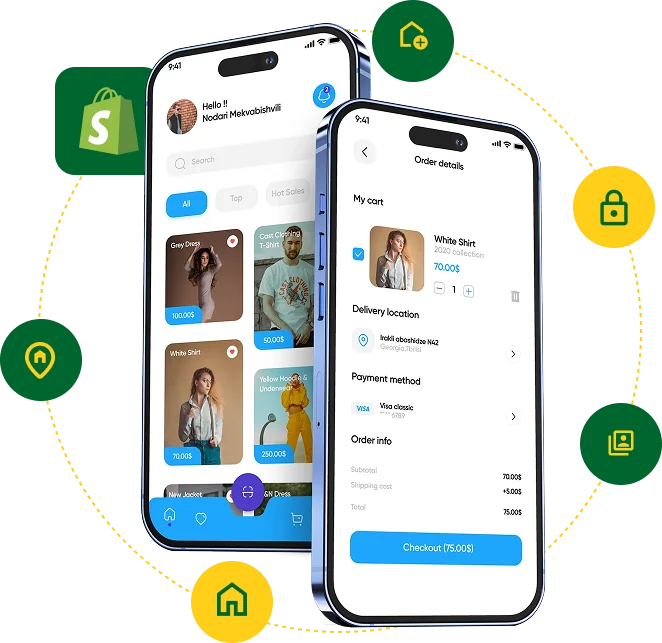
Ecommerce app builders are platforms designed to convert existing online stores into mobile apps with minimal effort. They typically integrate with platforms like Shopify or WooCommerce and reuse your existing website content, products, and checkout flow.
This approach is well suited for brands that want to launch quickly without hiring developers or managing complex builds. App builders focus on speed, cost efficiency, and ongoing maintenance, making them a practical choice for many growing ecommerce businesses.
2. Traditional App Development
Typical app development involves building an Ecommerce App from scratch using dedicated development teams. This method offers complete control over design, architecture, and custom features, but it also requires significant investment in time, money, and ongoing maintenance.
Custom development is usually chosen by large enterprises or businesses with very specific functional requirements that cannot be met by existing platforms.
Comparison of Ecommerce App Creation Methods
| Factor | Ecommerce App Builder | Traditional App Development |
| Time to Launch | Days or weeks | Several months |
| Upfront Cost | Low to moderate | High |
| Technical Expertise | Not required | Required |
| Maintenance | Managed by platform | Managed by your team |
| Customization | Moderate and practical | Fully custom |
| Scalability | Suitable for most ecommerce brands | Suitable for complex enterprise needs |
| Ongoing Updates | Automatic | Manual and ongoing |
Choosing the Right Approach
Both options can lead to a successful Ecommerce App, but the outcomes are very different. Ecommerce app builders are designed for speed, lower investment, and faster validation. They allow brands to launch quickly, learn from real user behavior, and improve the app continuously without heavy technical overhead.
Traditional development offers full control, but that control comes with higher costs, longer timelines, and greater risk. For most ecommerce brands, spending months building before seeing customer adoption delays growth and ties up resources.
An ecommerce app builder aligns better with business goals focused on retention, repeat purchases, and faster returns. It removes complexity, reduces risk, and lets brands focus on what matters most. Serving customers and growing revenue.
Step-by-Step Process for Building an Ecommerce App
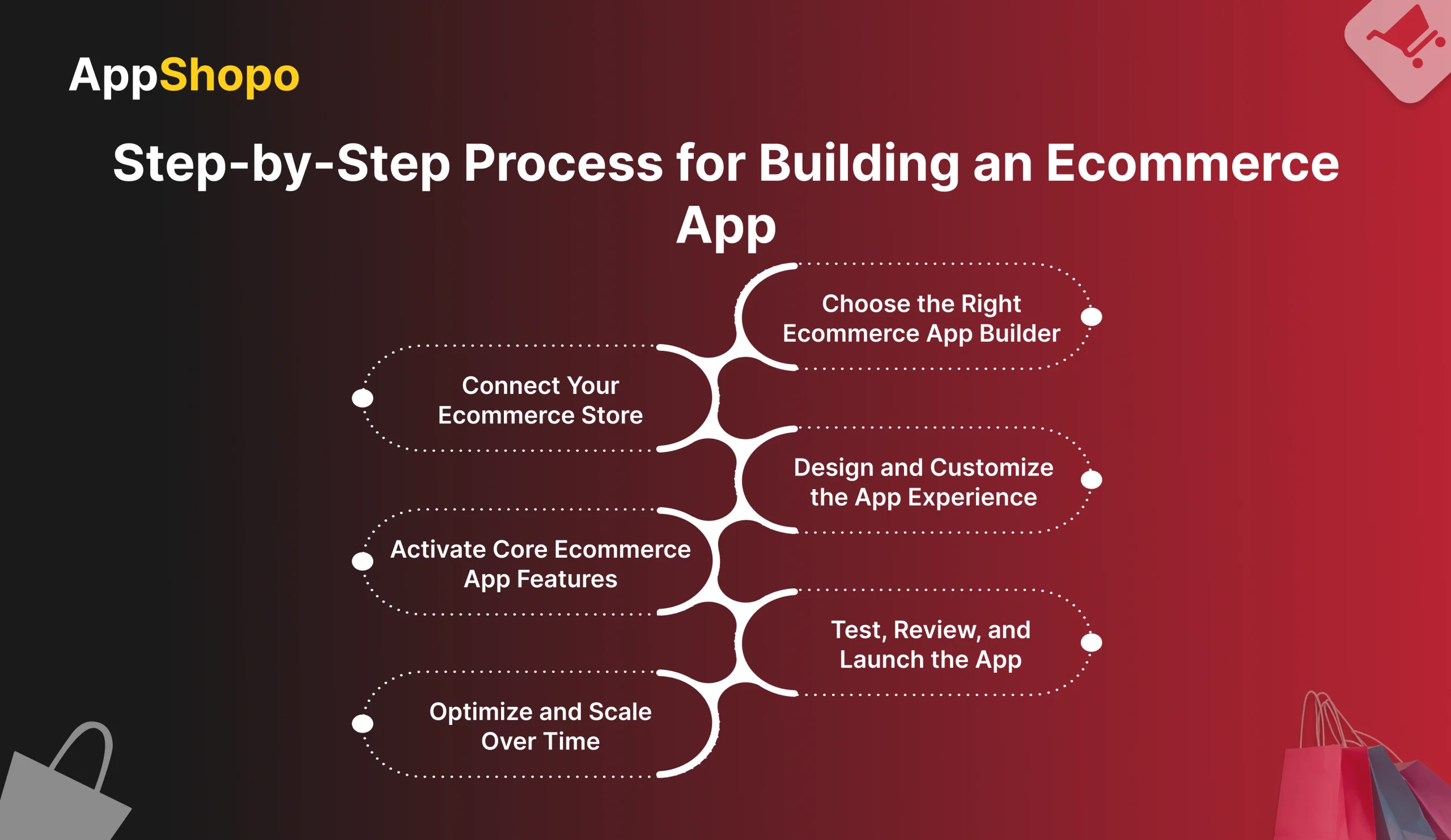
Building an Ecommerce App today is far more accessible than it was a few years ago. With modern app builders, brands can launch quickly, avoid technical complexity, and still deliver a polished mobile experience. Below is a complete, builder-based process that ecommerce businesses follow to move from idea to live app.
Step 1: Choose the Right Ecommerce App Builder
Everything starts with selecting a platform that fits your business model and growth plans. A strong ecommerce app builder removes the need for custom development and simplifies the entire process from setup to launch. Platforms like AppShopo are built specifically to turn existing ecommerce stores into fully functional mobile apps without rebuilding anything.
When evaluating an app builder, focus on:
- Native iOS and Android app support.
- Direct integration with your ecommerce platform.
- Built-in performance, security, and updates.
- Long-term scalability as your store grows.
The right builder sets the pace for how fast and smoothly your Ecommerce App comes together.
Step 2: Connect Your Ecommerce Store
After choosing the builder, you connect your existing online store to the platform. This step links your live data directly to the app, ensuring consistency across all channels.
During this process:
- Products, collections, and categories sync automatically.
- Pricing, discounts, and inventory stay updated in real time.
- Existing checkout and payment systems remain intact.
- Store management continues from one central dashboard.
This connection ensures your Ecommerce App operates as an extension of your store, not a separate system.
Step 3: Design and Customize the App Experience
With the store connected, the focus shifts to shaping how your brand appears on mobile. App builders provide visual customization tools that let you design the app without technical skills.
Customization typically covers:
- App icon, splash screen, and brand colors.
- Home screen structure and navigation flow.
- Featured collections, banners, and promotions.
- Product layout optimized for mobile browsing.
The objective is to deliver a clean, fast, and intuitive experience that encourages exploration and purchases.
Step 4: Activate Core Ecommerce App Features
This is where your Ecommerce App becomes a growth channel rather than just a mobile storefront. App builders offer built-in features designed to increase engagement and retention.
Common features to activate include:
- Push notifications for offers, drops, and reminders.
- User accounts with order history and tracking.
- Wishlist and saved items for repeat visits.
- Analytics to monitor installs, engagement, and sales.
These tools help brands build ongoing relationships with customers beyond the first purchase.
Step 5: Test, Review, and Launch the App
Before launch, the app goes through structured testing to ensure reliability and usability across devices and operating systems.
This stage includes:
- Verifying navigation, product loading, and checkout.
- Testing notifications and account functionality.
- Reviewing app store guidelines and compliance.
- Submitting the app for approval on app stores.
Once approved, your Ecommerce App becomes available for customers to download and use.
Step 6: Optimize and Scale Over Time
Launching the app is only the beginning. Long-term success depends on continuous improvement based on real user behavior.
Ongoing optimization involves:
- Monitoring user engagement and retention metrics.
- Refining notifications to avoid fatigue.
- Updating content to match campaigns and seasons.
- Improving performance based on customer feedback.
This iterative approach allows your Ecommerce App to grow alongside your business without requiring a complete rebuild.
When followed correctly, this process turns your Ecommerce App into a high-performing mobile channel that complements your existing store. You launch faster, stay in control of your brand, and grow on mobile without coding, rebuilding, or interrupting daily operations.
Also Read: How to Turn Shopify Store into a Mobile App
How to Launch and Promote Your Ecommerce App Successfully
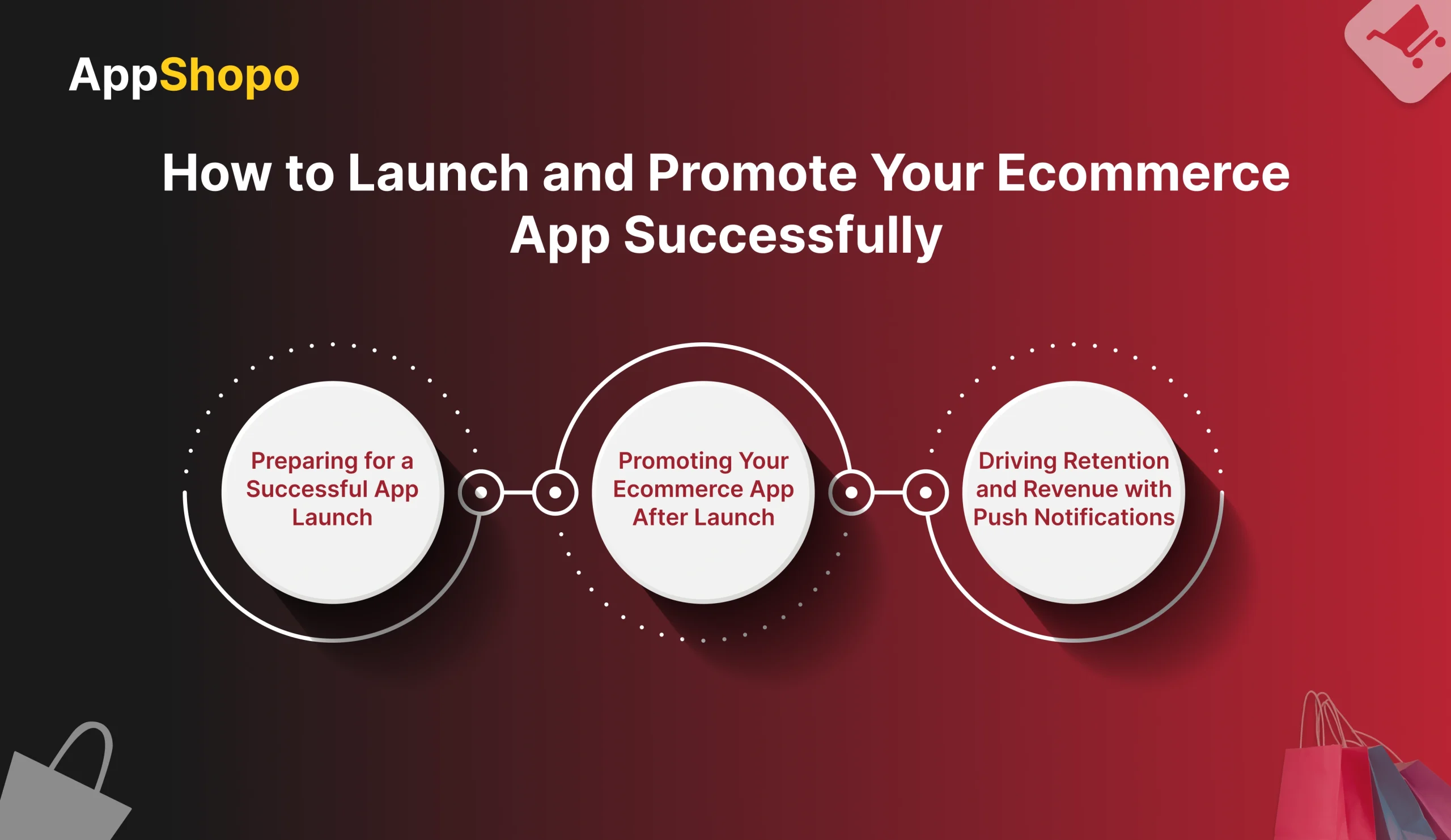
Launching an Ecommerce App is not just a technical milestone. It is a coordinated rollout that sets the tone for adoption, engagement, and long-term success. A well-planned launch ensures your app is stable, discoverable, and positioned as a valuable extension of your brand.
1. Preparing for a Successful App Launch
While every launch varies based on the platform and tools used, most Ecommerce App launches follow a clear sequence. The goal is to minimize friction and ensure customers encounter a polished experience from day one.
A standard launch process typically includes:
- Setting up developer accounts, branding assets, and required permissions.
- Configuring app navigation, layout, splash screens, and push notification settings.
- Conducting internal testing on real devices to catch usability or performance issues.
- Submitting the app for review on app stores and addressing approval requirements.
- Coordinating the go-live timeline with marketing and store updates.
Using a managed app builder simplifies this phase by reducing manual effort and guiding the process from setup to approval.
2. Promoting Your Ecommerce App After Launch
An Ecommerce App does not grow on its own. Even loyal customers need clear reasons and simple paths to install it. Promotion should focus on visibility, incentives, and ease of access across every customer touchpoint.
Effective promotion strategies include:
- Mobile site banners that highlight the app and link directly to downloads.
- Email and SMS campaigns explaining the benefits of shopping through the app.
- QR codes placed on packaging, invoices, and in-store materials.
- App-exclusive offers that reward customers for installing.
- First-order incentives designed specifically for app users.
When positioned correctly, the app feels like a natural upgrade rather than a separate channel.
3. Driving Retention and Revenue with Push Notifications
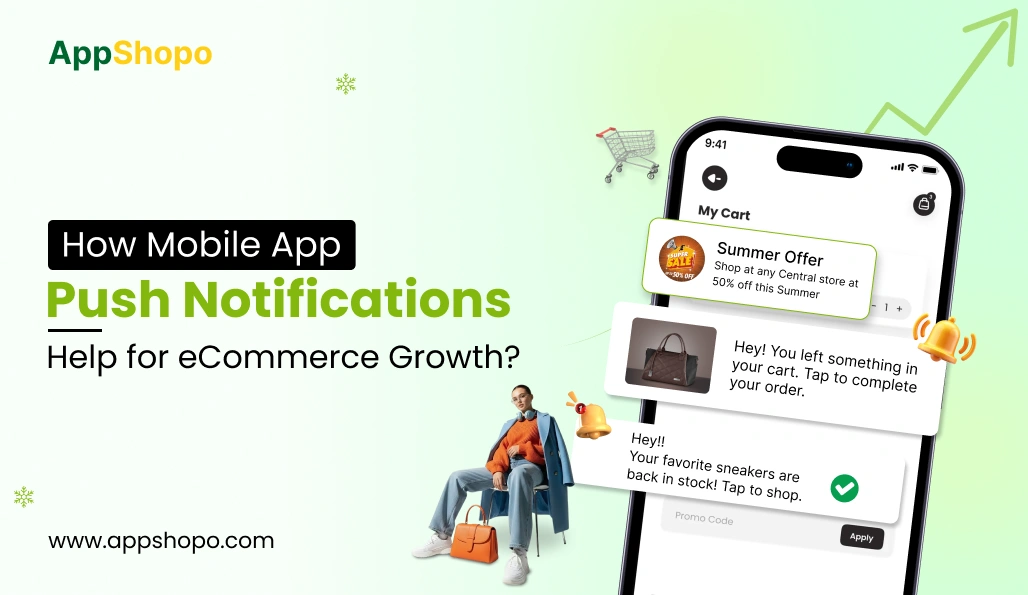
Push notifications are one of the most valuable advantages of an Ecommerce App. They provide direct access to customers without relying on inbox placement, ad spend, or algorithms. Notifications appear instantly on the home screen and encourage immediate action.
High-performing push strategies include:
- Cart reminders are sent shortly after abandonment.
- Time-sensitive promotions tied to limited inventory.
- Product availability alerts and personalized recommendations.
- Loyalty and VIP messages for repeat customers.
Beyond revenue, push notifications play a critical retention role. They keep the app visible, reinforce brand recall, and guide customers back whenever they are ready to shop.
When launch, promotion, and engagement work together, your Ecommerce App becomes more than a sales tool. It becomes a central growth channel that strengthens customer relationships and drives consistent mobile revenue.
Also Check: Top 15 Best Shopify App Builders
Common Ecommerce App Mistakes and How to Avoid Them
Building an Ecommerce App can unlock powerful growth, but only when it is done with the right strategy. Many apps fail not because of technology, but because of avoidable decisions made early on. Understanding these mistakes helps ensure your app becomes a long-term asset rather than a forgotten download.
1. Treating the Ecommerce App Like a Website
Problem
Many brands simply replicate their website inside the app. This leads to cluttered navigation, slower interactions, and an experience that feels poorly suited for mobile users.
How to Avoid It
Design the app specifically for mobile behavior. Simplify navigation, prioritize key collections, reduce steps to checkout, and focus on speed and ease of use.
2. Launching Without a Clear Reason to Download
Problem
Customers are rarely motivated to install an app without clear benefits. If the app offers nothing new, it quickly gets ignored or deleted.
How to Avoid It
Promote strong incentives such as app-only discounts, early access to launches, faster checkout, saved preferences, or exclusive content that adds real value.
3. Misusing Push Notifications
Problem
Sending too many notifications or irrelevant messages frustrates users and leads to app uninstalls, reducing long-term engagement and trust.
How to Avoid It
Use push notifications sparingly and strategically. Personalize messages, focus on timely updates, and align notifications with genuine shopping intent.
4. Overlooking App Performance and Speed
Problem
Slow loading screens, delayed product pages, or buggy interactions create friction. Mobile users expect instant responses and abandon apps that feel sluggish.
How to Avoid It
Optimize images, streamline content, and test the app across multiple devices. Regular updates and performance checks keep the Ecommerce App fast and reliable.
5. Ignoring Optimization After Launch
Problem
Many brands treat launch as the final step. Without updates or improvements, engagement drops and the app becomes outdated over time.
How to Avoid It
Track usage data, refine layouts, test promotions, and adjust notifications based on real customer behavior. Continuous optimization keeps the app relevant and profitable.
Avoiding these mistakes helps turn your Ecommerce App into a strong retention and revenue channel rather than a one-time experiment.
Read Also: Shopify Seasonal App Design Strategies That Convert
Final Thoughts: Creating a High-Performing Ecommerce App with AppShopo
A high performing Ecommerce App is no longer about having more features. It is about building a mobile experience that customers actually return to. Speed, simplicity, and consistent engagement matter more than complex functionality or long development cycles.
With the right approach, an Ecommerce App becomes a direct growth channel rather than an added expense. It strengthens customer relationships, improves retention, and creates a reliable path to repeat revenue. The most successful brands focus on launching quickly, learning from real behavior, and optimizing over time instead of waiting for perfection.
AppShopo makes this process practical and scalable. By removing technical barriers and reducing time to launch, it allows ecommerce brands to move faster, stay flexible, and focus on what truly drives results. When built and managed correctly, an Ecommerce App becomes one of the most valuable assets in your digital ecosystem.
FAQ’s
1. Do I need an Ecommerce App if I already have a mobile-friendly website?
A mobile website supports browsing, but an Ecommerce App drives stronger retention and repeat behavior. Apps load faster, stay visible on the home screen, and remove friction from repeat visits. They also enable push notifications, which help bring customers back without relying on ads or email.
2. How long does it take to build an Ecommerce App?
The timeline depends on how the app is built. Using an ecommerce app builder like AppShopo, most brands can launch within days or a few weeks. Custom development typically takes several months due to design, development, testing, and app store approval cycles.
3. Is building an Ecommerce App expensive?
Costs vary by approach. Ecommerce app builders reduce upfront investment by avoiding custom development and ongoing technical maintenance. Traditional development involves higher initial costs, developer resources, and long term maintenance expenses that may not suit every business.
4. Will my Ecommerce App stay synced with my existing store?
Yes. Modern Ecommerce Apps sync products, inventory, pricing, and checkout directly with your existing store. This ensures updates happen in real time and store management continues from a single dashboard without duplicate work.
5. How does an Ecommerce App help increase repeat purchases?
Apps reduce friction across the shopping journey and create habitual usage through faster access and saved preferences. Push notifications, order tracking, and personalized offers encourage customers to return more frequently and complete repeat purchases.
6. What makes an Ecommerce App successful after launch?
Success depends on ongoing promotion, meaningful incentives to install, and consistent engagement. Monitoring user behavior, optimizing notifications, improving performance, and updating content regularly helps keep the app relevant and profitable over time.

Pankaj Arora
Founder, AppShopo

Pankaj Arora is a technology entrepreneur and the Founder of AppShopo, with over 10 years of experience in helping businesses transform websites into high-performing mobile apps. His expertise spans eCommerce app development, Shopify and WooCommerce integrations, mobile UX optimization, and scalable app delivery. Through AppShopo, Pankaj has enabled brands worldwide to launch fast, reliable Android and iOS apps that drive higher engagement, retention, and mobile sales.