How To Promote Mobile App During Pre-Launch, Launch, & Post-Launch Stages
The success of a mobile app is not solely reliant on possessing premium features and a sleek design. A plan outlining visibility is a must in such cases; otherwise, the best apps would still face difficulties in finding their target audience and gaining traction in the very competitive app stores.
Understanding how to promote mobile app products effectively requires thinking beyond launch day. App marketing works best when it is planned in phases, starting before the app is released, accelerating at launch, and continuing long after the initial downloads begin. Each stage serves a distinct purpose, from creating early awareness to driving installs and building long-term user engagement.
Our team at AppShopo put together this guide on how to promote mobile app products across every critical stage. Drawing from our experience working with app creators and businesses, we know that effective app marketing does not stop at launch day. It starts well before release, accelerates during launch, and continues long after the first wave of downloads.
To keep this practical and easy to apply, we have organized these strategies into three key stages of mobile app marketing: pre-launch, launch, and post-launch. Each stage serves a specific purpose, and when combined, they help drive consistent visibility, attract the right users, improve engagement, and support sustainable growth instead of short-lived spikes.
- Mobile app promotion works best when planned across pre-launch, launch, and post-launch stages.
- Visibility alone is not enough; retention and engagement drive real growth.
- Organic strategies like app store optimization can be highly effective, even with a zero budget.
- Tracking the right metrics ensures promotion efforts lead to long-term results.
- Promoting a mobile app requires a phased strategy that starts before release and continues well after launch.
- Pre-launch efforts focus on audience clarity, demand validation, and building early awareness to reduce launch risk.
- Launch stage promotion should concentrate on visibility, discoverability, and first impressions through coordinated announcements and optimized app store listings.
- Post-launch success depends on onboarding, retention campaigns, and continuous improvement based on user behavior.
- App store optimization plays a critical role in both free and paid promotion by improving discovery and conversion.
- Measuring performance across acquisition, engagement, retention, and revenue provides a complete view of app marketing effectiveness.
- Avoiding common mistakes such as focusing only on installs or ignoring user feedback helps sustain long-term growth.
Why App Marketing Needs a Three-Stage Plan
Promoting a mobile app is not a single campaign or a one-day announcement. Apps compete for attention in crowded marketplaces where users make decisions in seconds. Without a structured approach, even well-built apps struggle to gain visibility or retain users.
A three-stage plan helps you promote mobile app products with clear intent at every phase. Before launch, the focus is on awareness and validation. You introduce the problem your app solves and start building interest among the right audience. This reduces the risk of launching to silence.
During the launch stage, attention peaks. Users are curious, early adopters are willing to try something new, and visibility is at its highest. A defined launch strategy ensures this attention translates into installs, reviews, and early momentum instead of fading quickly.
After launch, the real work begins. Most users decide whether to keep or delete an app within the first few days. A post-launch plan allows you to continue to promote mobile app adoption through engagement, updates, and retention-driven campaigns. It also helps you learn from user behavior and refine your marketing over time.
By breaking app marketing into pre-launch, launch, and post-launch stages, you create consistency, reduce wasted effort, and build sustainable growth instead of relying on short-lived promotion bursts.
Also Read: Top Shopify Sales Growth Strategies
Pre-Launch App Advertising Strategy
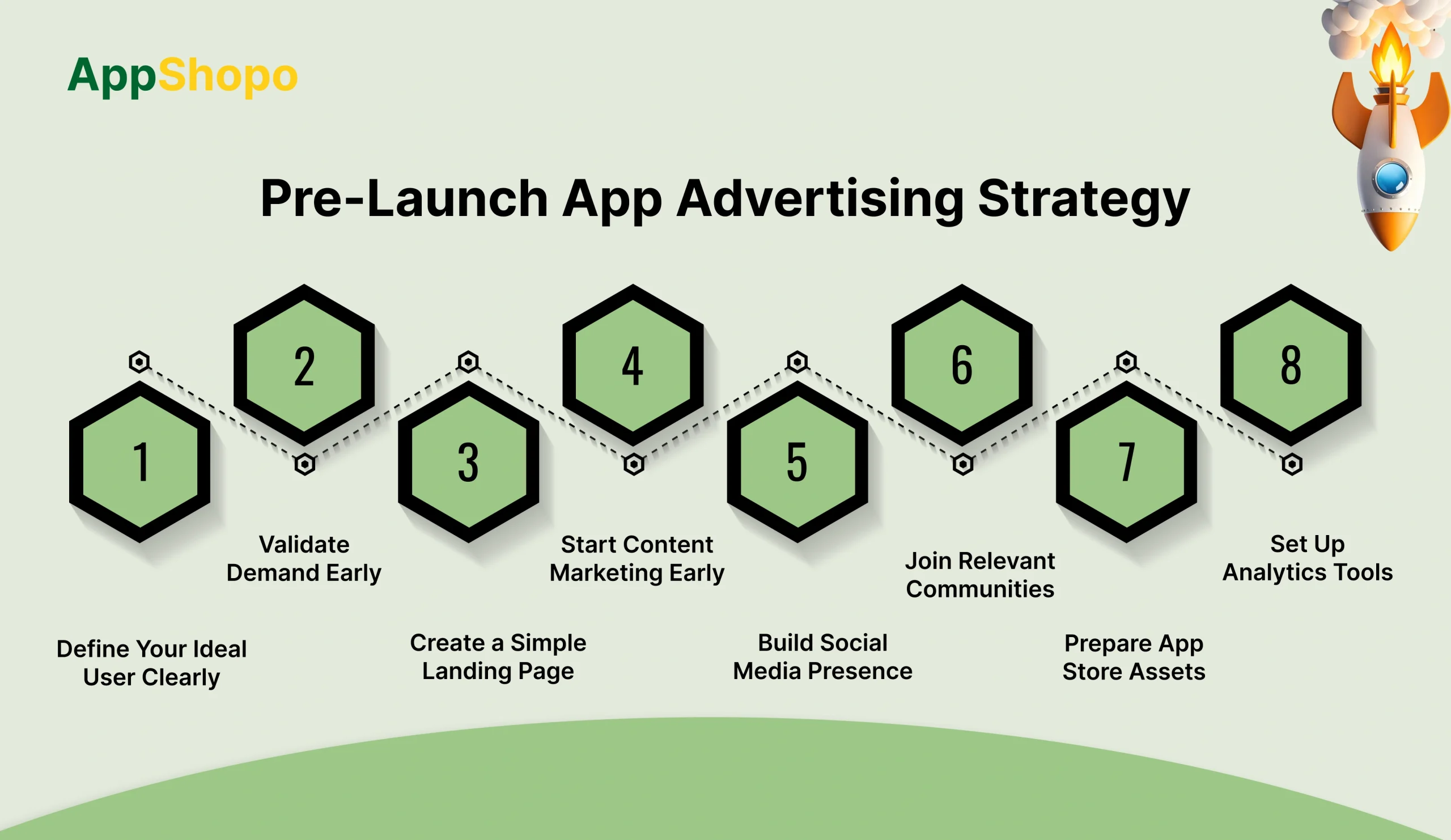
A strong pre-launch plan sets the foundation for everything that follows. This stage is where you reduce risk, build early interest, and position your product clearly before you promote mobile app availability to the public.
1. Define Your Ideal User Clearly
Before you spend time or money on promotion, you need absolute clarity on who the app is for. Trying to attract everyone usually results in reaching no one.
When you define your ideal user, you create focused messaging that resonates and converts.
- Identify the primary problem your app solves.
- Understand user demographics, behavior, and motivations.
- Map common frustrations and daily use cases.
- Clarify why your app is a better choice than alternatives.
This clarity ensures every marketing effort speaks directly to the people most likely to install and use your app.
2. Validate Demand Early
Assumptions are expensive in app marketing. Validating demand early helps confirm that real users want the solution you are building.
Early validation allows you to adjust positioning before launch instead of fixing mistakes later.
- Run surveys or polls with your target audience.
- Test value propositions using small ad campaigns.
- Share mockups or demos to gather reactions.
- Analyze interest levels through signups or waitlists.
Validating demand gives you confidence and data to promote mobile app features that truly matter.
3. Create a Simple Landing Page
A landing page acts as the central hub for all pre-launch promotion. It gives interested users a place to learn more and stay connected.
The goal is clarity, not complexity.
- Explain the main benefit of the app in simple language.
- Highlight the core problem and your solution.
- Collect email addresses for launch announcements.
- Include visuals or previews to build trust.
This page becomes a key asset when you promote mobile app awareness across channels.
4. Start Content Marketing Early
Content marketing builds authority and visibility long before your app is live. It positions your brand as helpful rather than promotional.
Early content also improves long-term discoverability.
- Publish blogs around problems your app solves.
- Share short educational videos or tips.
- Answer common questions your audience searches for.
- Repurpose content across multiple platforms.
By the time you promote mobile app downloads, people already recognize and trust your brand.
5. Build Social Media Presence
Social platforms help you create ongoing conversations, not just announcements. Starting early allows you to grow organically instead of rushing at launch.
Consistency matters more than volume.
- Secure brand usernames across relevant platforms.
- Share behind-the-scenes updates and progress.
- Engage with comments and questions regularly.
- Follow and interact with industry voices.
A strong presence makes it easier to promote mobile app updates and launch announcements later.
6. Join Relevant Communities
Communities offer direct access to users who care deeply about specific problems. When done right, this builds credibility and relationships.
The focus should always be contribution first.
- Participate in forums, groups, and discussion boards.
- Answer questions without pushing your product.
- Share insights based on real experience.
- Introduce your app only when it adds value.
These communities often become your earliest and most loyal users.
7. Prepare App Store Assets
Your app store listing is often the first impression users have of your product. Poor assets can undo strong marketing efforts.
Preparation helps you stand out from day one.
- Write a clear and benefit-driven app description.
- Design screenshots that explain value visually.
- Create preview videos that show real use cases.
- Research keywords relevant to your niche.
Optimized assets support discovery when you promote mobile app visibility through search.
8. Set Up Analytics Tools
Analytics ensure that every decision is based on data, not guesswork. Setting this up early prevents blind spots after launch.
You want visibility into user behavior from the start.
- Track installs and traffic sources.
- Monitor onboarding completion and drop-offs.
- Measure engagement and session activity.
- Prepare dashboards for ongoing analysis.
With analytics in place, you can promote mobile app growth with clarity and confidence.
Read Also: Best Website to App Conversion Tools to Use
Launch Stage App Advertising Strategy
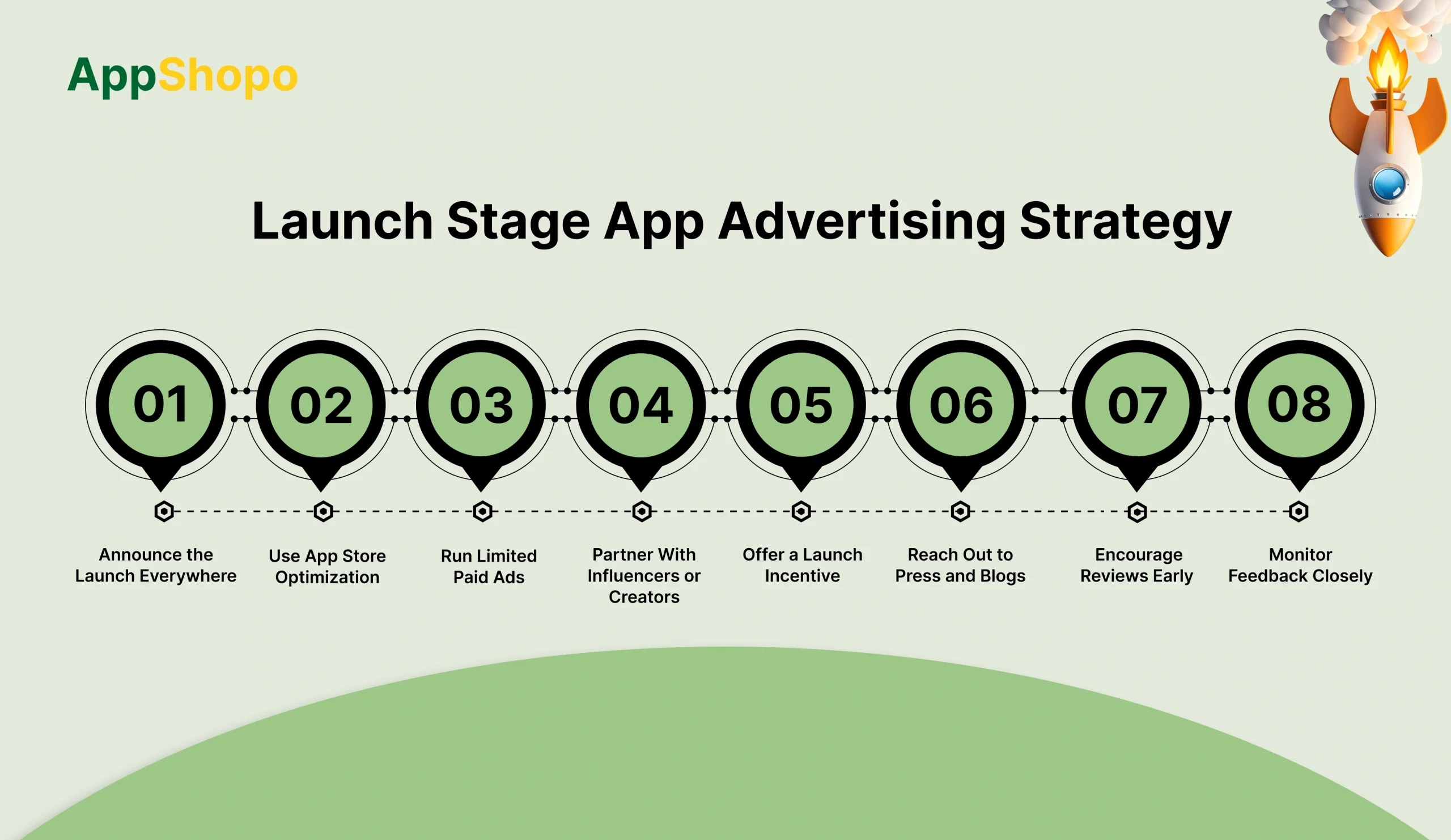
The launch stage is where preparation turns into action. This is the moment when visibility peaks and first impressions are formed. A structured approach helps you promote mobile app downloads effectively while building early trust and momentum.
1. Announce the Launch Everywhere
Your launch should feel coordinated and intentional across all channels. Users should encounter the announcement more than once, without it feeling repetitive.
Consistency reinforces awareness and credibility.
- Send a launch email to your pre-launch list.
- Publish announcements across all social platforms.
- Add website banners or pop-ups highlighting availability.
- Share launch updates in relevant communities.
A broad announcement ensures no interested user misses the moment you promote mobile app availability.
2. Use App Store Optimization
App store optimization plays a critical role during launch when discoverability matters most. A well-optimized listing helps users find your app organically.
Strong ASO supports long-term growth beyond launch week.
- Use keywords aligned with user search intent.
- Write a clear, benefit-focused app title and description.
- Design screenshots that explain value instantly.
- Test icons and preview visuals for clarity.
Optimized listings increase conversion when users land on your app page.
3. Run Limited Paid Ads
Paid advertising during launch should focus on learning, not scale. Small, controlled budgets help you test messaging and audiences.
This approach prevents wasted spending.
- Start with low daily budgets across selected platforms.
- Test multiple creatives and value propositions.
- Target audiences similar to early signups.
- Track install quality, not just volume.
These insights help you promote mobile app campaigns more effectively later.
4. Partner With Influencers or Creators
Creators bring trust and reach within specific niches. Even small creators can deliver strong results if their audience aligns with your app.
Relevance matters more than follower count.
- Identify creators who speak to your target users.
- Share clear talking points without scripting content.
- Focus on real use cases and benefits.
- Track installs and engagement from each partnership.
Creator endorsements can humanize your app and drive high-intent installs.
5. Offer a Launch Incentive
Incentives encourage faster adoption and reduce hesitation. They give users a reason to try the app now instead of later.
The incentive should feel valuable but sustainable.
- Offer free trials or limited-time features.
- Provide early access or exclusive content.
- Highlight incentives clearly in promotions.
- Set a defined time window to create urgency.
Well-structured offers help promote mobile app adoption during launch.
6. Reach Out to Press and Blogs
Media coverage adds credibility and expands reach beyond owned channels. Journalists and bloggers look for clear stories, not product pitches.
Position your app with purpose.
- Craft a concise pitch explaining the problem and solution.
- Highlight what makes your app different or timely.
- Share real data, insights, or founder perspective.
- Follow up respectfully without spamming.
Press mentions can amplify awareness and improve brand trust.
7. Encourage Reviews Early
Early reviews influence user decisions and app store rankings. Positive feedback builds confidence for new users browsing your listing.
Timing and tone matter.
- Prompt users after a positive in-app experience.
- Avoid asking for reviews too early in the journey.
- Make the review process quick and simple.
- Respond to early reviews publicly when possible.
Reviews strengthen social proof as you promote mobile app visibility.
8. Monitor Feedback Closely
Launch feedback reveals what works and what needs improvement. Ignoring it risks losing early users permanently.
Active listening builds trust.
- Track support tickets and app store comments.
- Monitor social media mentions and messages.
- Identify recurring complaints or confusion points.
- Release quick fixes and communicate updates.
Responding fast shows commitment and improves retention from the start.
Also Read: B2B Ecommerce Growth: Why Mobile Apps Matter
Post-Launch App Growth and Retention Strategy
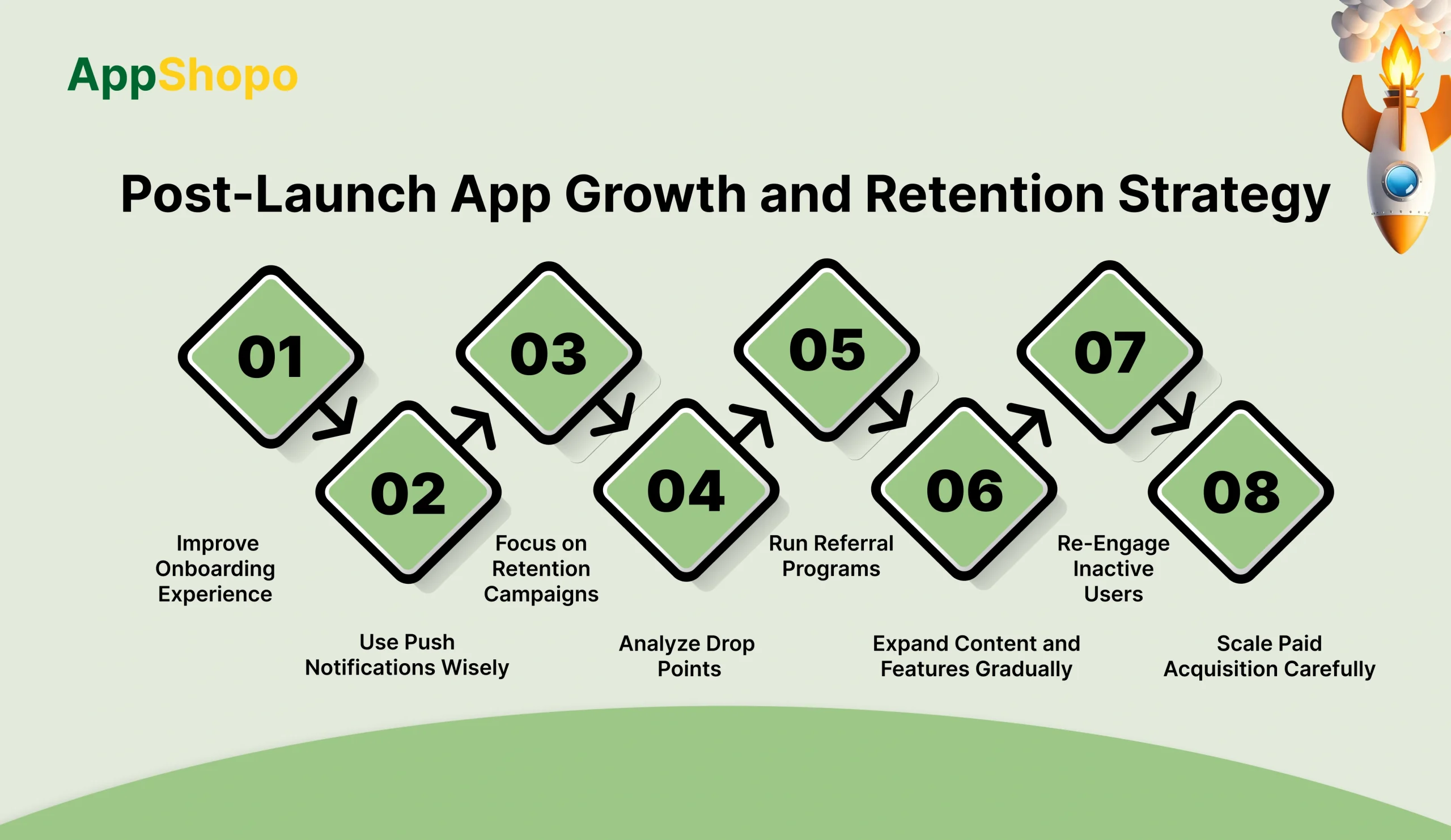
Once the initial launch momentum settles, long-term success depends on retention and steady growth. This stage focuses on keeping users engaged while continuing to promote mobile app value in meaningful ways.
1. Improve Onboarding Experience
Onboarding determines whether users understand your app or abandon it within minutes. A clear and simple introduction builds confidence and reduces friction.
Your goal is to help users experience value as quickly as possible.
- Remove unnecessary steps during sign-up.
- Highlight one or two core actions first.
- Use short prompts or tooltips for guidance.
- Let users explore without forcing tutorials.
A strong onboarding flow increases retention and supports long-term engagement.
2. Use Push Notifications Wisely
Push notifications are powerful when used with restraint. Poorly timed or irrelevant messages push users away instead of bringing them back.
Notifications should feel helpful, not intrusive.
- Send reminders based on user behavior.
- Personalize messages using in-app actions.
- Avoid excessive frequency or generic wording.
- Test timing to match user activity patterns.
Smart notifications help promote mobile app usage without frustrating users.
3. Focus on Retention Campaigns
Retention campaigns keep your app relevant after the initial download. They guide users back with clear reasons to return.
Consistency matters more than volume.
- Create in-app messages tied to user goals.
- Send emails highlighting useful features or updates.
- Share tips that improve the user experience.
- Segment campaigns based on user activity.
Retention-focused communication strengthens loyalty and long-term usage.
4. Analyze Drop Points
Understanding where users leave helps you fix real problems instead of guessing. Drop-off data reveals friction points in the user journey.
This insight drives smarter improvements.
- Track onboarding and feature usage funnels.
- Identify screens with high exit rates.
- Compare behavior between retained and lost users.
- Test changes and measure impact.
Data-driven decisions help promote mobile app growth sustainably.
5. Run Referral Programs
Referral programs turn satisfied users into advocates. They work best when sharing feels natural and rewarding.
Simplicity drives participation.
- Offer clear incentives for both referrer and invitee.
- Make sharing fast and effortless.
- Promote referrals inside high engagement moments.
- Track referral quality, not just volume.
Referrals often bring higher retention users than ads.
6. Expand Content and Features Gradually
Post-launch updates should solve real user needs, not add complexity. Gradual improvements show commitment and keep the app feeling fresh.
User feedback should guide priorities.
- Release features based on usage patterns.
- Improve existing tools before adding new ones.
- Communicate updates clearly inside the app.
- Highlight how changes benefit users.
Thoughtful updates help promote mobile app relevance over time.
7. Re-Engage Inactive Users
Not every user leaves permanently. Many just need a reminder of the value your app provides.
Reengagement should feel personal.
- Identify users who stopped opening the app.
- Send targeted messages addressing likely friction.
- Highlight new features or improvements.
- Offer limited incentives to return.
Winning back users is often more cost-effective than acquiring new ones.
8. Scale Paid Acquisition Carefully
Paid growth should only scale after retention is proven. Driving installs without engagement wastes budget and damages metrics.
Control and testing are essential.
- Increase budgets gradually based on performance.
- Focus on audiences similar to retained users.
- Optimize creatives based on engagement quality.
- Monitor lifetime value against acquisition cost.
Careful scaling ensures you promote mobile app growth profitably and sustainably.
Read Also: How to Convert Shopify Store to Mobile App
Can I Promote My Mobile App for Free
Yes, it is absolutely possible to promote mobile app products without spending money on ads. Many successful apps build their first wave of users using organic strategies that rely more on time, consistency, and smart positioning than on budget.
Free promotion works best when you focus on visibility, trust, and relevance.
- App store optimization: Optimizing your app title, description, keywords, screenshots, and icon improves discoverability without any ad spend. Strong ASO helps users find your app naturally when they search for solutions.
- Content marketing: Publishing blogs, guides, videos, and social posts around the problem your app solves builds authority and long-term traffic. Over time, this content continues to attract users who already have intent.
- Social media engagement: Actively sharing updates, tips, and insights on social platforms helps you connect directly with potential users. Consistent engagement builds familiarity before you ever ask for a download.
- Community participation: Being helpful in forums, groups, and discussion platforms allows you to introduce your app organically. When done right, this creates trust instead of feeling promotional.
- Referral programs: Encouraging existing users to invite others turns word of mouth into a scalable channel. Referral-driven installs often convert better than paid traffic.
- Email outreach and waitlists: If you collect emails early, you can promote mobile app launches and updates directly to interested users without ongoing costs.
While free promotion requires patience and effort, it builds a strong foundation. Once traction and retention are proven, paid channels can then amplify growth rather than replace it.
How to Measure App Marketing Performance
Promoting a mobile app without tracking performance is guesswork. To promote mobile app growth effectively, you need clear visibility into what is working, what is underperforming, and where users drop off. The right metrics help you improve campaigns, optimize user experience, and spend time and money more wisely.
App marketing performance should be measured across acquisition, engagement, retention, and revenue. Looking at installs alone gives an incomplete picture. Real success comes from understanding user quality and long-term value.
Key Metrics to Track When You Promote Mobile App Growth
| Metric | What It Measures | Why It Matters |
| App Installs | Total number of downloads | Indicates reach but not user quality |
| Cost Per Install | Spend required to acquire one user | Helps evaluate paid campaign efficiency |
| Active Users | Daily and monthly active users | Shows how many users actually use the app |
| Retention Rate | Users who return after first use | Strong indicator of product value |
| Churn Rate | Users who stop using the app | Highlights experience or relevance issues |
| Session Length | Time spent per session | Reflects engagement and usability |
| Conversion Rate | Users completing key actions | Measures how well the app drives outcomes |
| Lifetime Value | Revenue per user over time | Determines sustainable growth potential |
How to Use These Metrics Effectively
Tracking metrics alone is not enough. The real value comes from connecting the data to action.
- Compare acquisition sources to retention performance.
- Identify campaigns that drive engaged users, not just installs.
- Monitor onboarding completion and early drop-off patterns.
- Test changes and measure their impact over time.
If installs rise but retention drops, the issue lies in user experience, not promotion. Measuring the full journey allows you to promote mobile app success with confidence and consistency.
Also Read: Launch a Fashion and Apparel App with Shopify
Common App Marketing Mistakes to Avoid
Many apps fail not because of poor functionality, but because of avoidable marketing missteps. When you promote mobile app products without a clear strategy, even strong campaigns can fall short. Being aware of these common mistakes helps you protect your budget, your time, and your growth potential.
1. Treating Launch Day as the Finish Line
One of the biggest mistakes is putting all marketing effort into launch day and then stopping. App promotion is an ongoing process that requires planning before and sustained action after release.
- Skipping pre-launch awareness building.
- Losing momentum after the first download spike.
- Failing to support users post-launch.
Long-term growth depends on consistency, not a single announcement.
2. Focusing Only on Installs
High install numbers look good, but they rarely tell the full story. If users do not engage or return, installs become meaningless.
- Ignoring retention and engagement metrics.
- Measuring success only by download volume.
- Overlooking user behavior inside the app.
To promote mobile app success, quality users matter more than quantity.
3. Targeting Too Broad an Audience
Trying to appeal to everyone often results in weak messaging. When positioning is unclear, users struggle to understand the app’s value.
- Generic app descriptions and ads.
- Unfocused content and promotions.
- Low conversion rates despite visibility.
Clear audience targeting improves relevance and results.
4. Spending on Ads Without Product Readiness
Running paid campaigns before fixing onboarding issues or bugs wastes budget and damages trust.
- Driving users to a broken experience.
- Paying for traffic that immediately drops off.
- Scaling ads before retention is proven.
Promotion should amplify a solid product, not compensate for gaps.
5. Ignoring App Store Optimization
Many teams underestimate how much discovery happens inside app stores. Poor listings reduce visibility and conversion.
- Unoptimized titles and descriptions.
- Weak screenshots that fail to explain value.
- Missing keyword opportunities.
Strong ASO supports organic growth when you promote mobile app visibility.
6. Overusing Push Notifications
Notifications can increase engagement, but excessive or irrelevant messages push users away.
- Sending generic alerts to all users.
- Poor timing that interrupts user flow.
- No personalization based on behavior.
Smart communication builds loyalty instead of frustration.
7. Not Responding to Feedback
User feedback is one of the most valuable growth signals. Ignoring it creates distance between you and your audience.
- Unanswered reviews and support requests.
- Repeated complaints going unresolved.
- Missed opportunities for improvement.
Listening and responding builds trust and retention.
8. Failing to Track the Right Metrics
Without proper measurement, decisions are based on assumptions. This often leads to wasted effort.
- No analytics setup from day one.
- Tracking installs without engagement data.
- Not testing or iterating based on insights.
Clear metrics allow you to promote mobile app growth with direction and confidence.
Final Thoughts
Promoting a mobile app is not a one-time task or a short campaign tied only to launch day. It is a continuous process that evolves as your product, users, and market change. Teams that see app marketing as an ongoing responsibility are far more likely to build lasting traction.
When you promote mobile app growth across pre-launch, launch, and post-launch stages, each effort supports the next. Early awareness reduces launch risk, a focused launch builds momentum, and post-launch optimization turns downloads into long-term users. This structure keeps your strategy intentional instead of reactive.
The most successful apps stay flexible. They listen to users, track the right metrics, and refine both product and messaging over time. With the right approach, app promotion becomes less about chasing numbers and more about building real value that users return to again and again.
FAQ’s
1. What should I prioritize if my app promotion budget is zero?
If you can focus on only one thing with no budget, prioritize app store optimization. A well-optimized listing improves visibility and conversion without any ongoing cost. Pair this with actively encouraging user reviews and referrals, and make your app easy to discover through your own channels such as your website, emails, social profiles, and QR codes. Together, these efforts create a strong organic foundation that continues to work long after launch.
2. How can I improve my chances of getting featured on the App Store or Google Play?
App store features are editorial decisions, so there is no guaranteed formula. However, certain practices can significantly improve your chances. Focus on delivering a high-quality app with a polished user experience and stable performance. Ensure full compliance with platform guidelines and eliminate crashes or technical issues. Localization, alignment with seasonal trends, external press coverage, and building relationships with developer relations teams can also help your app stand out to editors.
3. My app is live, but growth is slow. Should I invest in ads immediately?
Paid ads can help accelerate growth, but they should not be the first response to slow traction. Before spending money, review your fundamentals. Make sure your app store listing clearly communicates value and is fully optimized. Check whether users are finding your app organically and whether they stay engaged after installing. Once retention and messaging are solid, testing ads with a small, controlled budget becomes far more effective and sustainable.

Pankaj Arora
Founder, AppShopo

Pankaj Arora is a technology entrepreneur and the Founder of AppShopo, with over 10 years of experience in helping businesses transform websites into high-performing mobile apps. His expertise spans eCommerce app development, Shopify and WooCommerce integrations, mobile UX optimization, and scalable app delivery. Through AppShopo, Pankaj has enabled brands worldwide to launch fast, reliable Android and iOS apps that drive higher engagement, retention, and mobile sales.