Shopify Mobile App Builders: Best Budget-Friendly for 2026

The eCommerce industry is going through a transformation that is quicker than ever at the rate of change. Mobile commerce in 2026 will no longer be viewed as a trend but will mainly be the position of customers to browse through, buy and engage with brands online. Hence, the change has brought about both an opportunity and a challenge for store owners at Shopify. While mobile traffic keeps growing, mobile websites alone are often not capable of delivering the speed, engagement, and retention that customers of today expect.
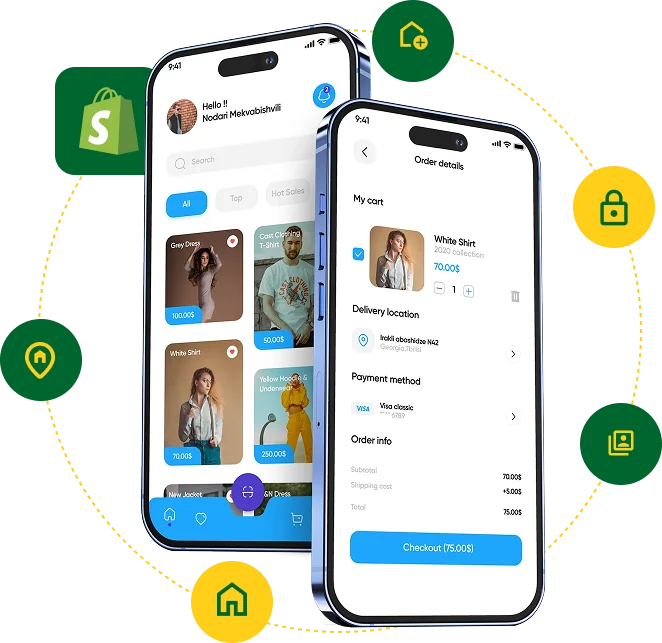
This is the place where Shopify mobile app builders become useful. For mobile users, an app that is solely focused on them could provide quicker loading times, uninterrupted browsing, personalized user experience per customer, and the ability to communicate via push notifications, which are direct. Nevertheless, the custom app development might still be seen as expensive and complex by most of the small and medium-sized Shopify merchants.
According to the survey in 2025, mobile ecommerce accounts for 59% of the total ecommerce retail sales, representing $2.51 trillion in revenue
Fortunately, the introduction of inexpensive Shopify mobile application builders has revolutionized the whole scenario. By using these applications, business owners can create a mobile app equipped with all necessary features at a price that is only a small percentage of what a custom-developed app would cost. This blog will explain the cheapest alternatives, the important features to be assessed, and how to pick the right solution for your Shopify store in 2026.
- Shopify mobile apps boost conversions, retention, and customer lifetime value.
- Affordable app builders eliminate expensive custom mobile development costs.
- In 2026, no-code and hybrid builders are the main means of creating apps for Shopify.
- It is better to choose the necessary features instead of the cheapest one.
- AppShopo provides economical and scalable Shopify mobile app solutions.
- Mobile commerce still gains ground over desktop shopping, and thus Shopify mobile apps have become indispensable for the long-term growth and engagement of customers.
- Cheap Shopify mobile app constructors allow small and mid-sized retailers to create professional apps without needing technical skills and spending a lot of money.
- The best Shopify app developers have figured out the perfect combination of price, native performance, push notifications, and seamless integration with Shopify.
- The conversion of a website to an app and no-code platforms helps in reducing the expenses; however, their customization capability and performance quality differ significantly.
- AppShopo offers a budget-friendly, scalable solution of the Shopify mobile app for merchants who are looking to grow in the year 2026.
The Rise of Affordable Shopify Mobile App Builders
It used to be that developing a mobile app for a Shopify store meant you had to bring on a whole team of developers and designers and wait through long development cycles. The costs typically ran into the thousands and sometimes even tens of thousands of dollars, thus making mobile apps out of reach for smaller brands.
Nowadays, app builder platforms have made mobile app production accessible to everyone. Such tools, which are the result of SaaS and no-code trends, furnish ready-made app frameworks, automated Shopify integrations, and user-friendly interfaces that cut down on cost and time-to-market significantly.
According to industry analyses and reference comparisons such as those outlined by Mobiloud, affordability in Shopify mobile app builders is driven by:
- Subscription-based pricing models
- Reusable app templates
- Automated syncing with Shopify data
- Reduced need for ongoing technical maintenance
These advancements allow merchants to focus on growth rather than development complexity.
Why Shopify Store Owners Need Mobile Apps in 2026
By the year 2026, the customer behavior would have changed so much that Shopify store owners would have no choice but to adapt to it. The guide looks into the least expensive mobile app builders for Shopify, providing the rationale for higher conversions, stronger customer retention, and direct communication with customers from mobile apps. It discusses the factors that make a mobile app builder budget-friendly, the characteristics that one should assess, the blunders that need to be evaded, and the mobile app solution that is right for your Shopify store to thrive without incurring hefty development costs.
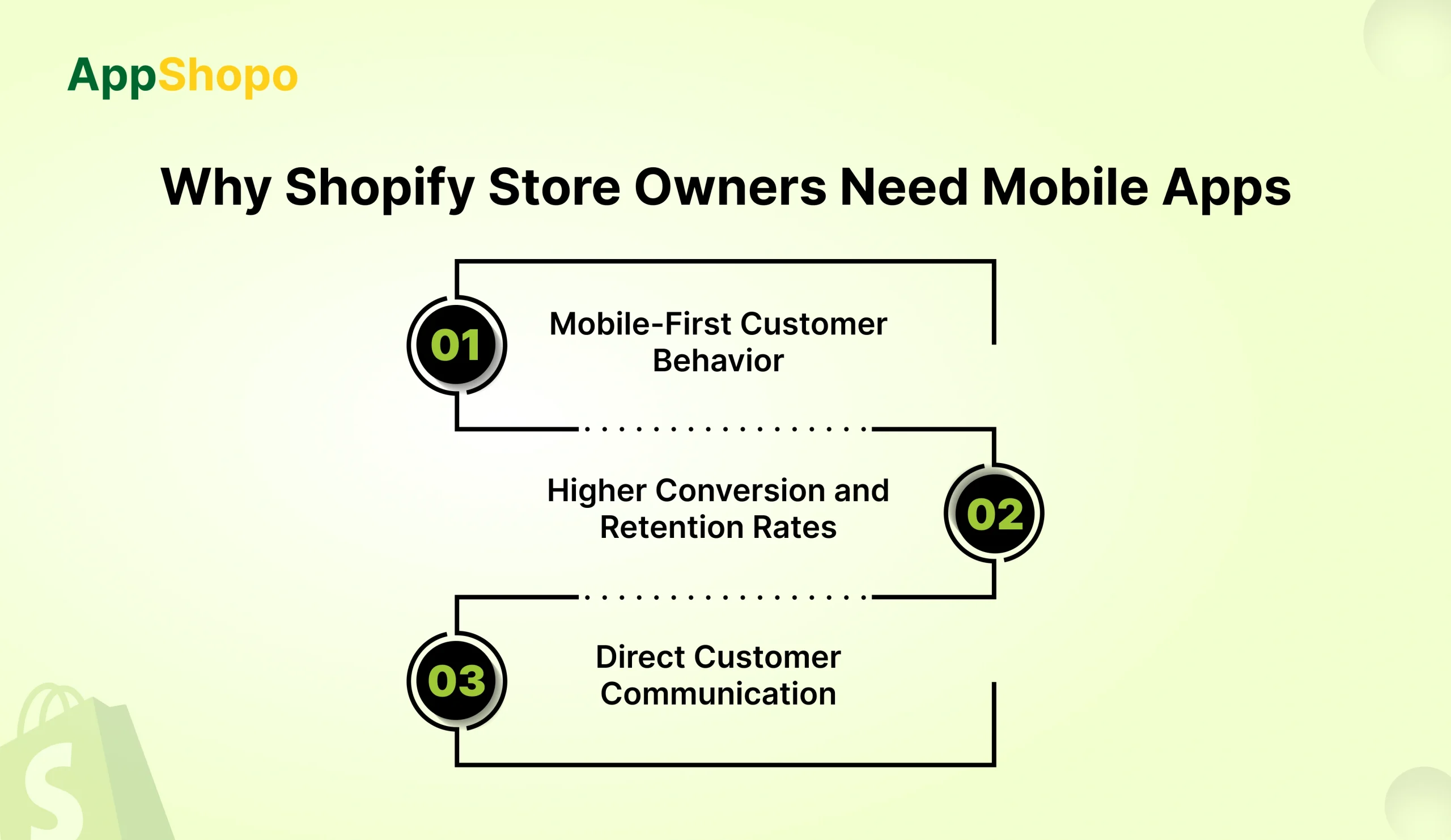
1. Mobile-First Customer Behavior
By 2026, the majority of online shopping activities will be initiated and completed on mobile phones. Customers are looking for fast, easy, and personalized services. Mobile applications are better than mobile sites, as they provide easier navigation, quicker loading, and more efficient checkout processes that help to lower the cancellation of the transaction and the leaving of the shopping cart without purchasing.
- Mobile devices dominate product discovery, browsing, and purchasing decisions
- Apps provide faster performance than mobile browsers
- Personalized in-app experiences increase customer satisfaction
- Simplified navigation reduces bounce rates
- Optimized checkout improves order completion
2. Higher Conversion and Retention Rates
Mobile applications are always able to deliver better conversion rates as compared to mobile browsers. The buying process is made easy by the features such as saved preferences, one-tap checkout, and in-app wallets, which is the reason why customers are not only making more purchases but also returning more often to the store.
- One-tap checkout minimizes cart abandonment
- Saved user data speeds up repeat purchases
- In-app loyalty programs increase retention
- Exclusive app offers drive repeat engagement
- Push notifications re-engage inactive users
3. Direct Customer Communication
Through push notifications, Shopify merchants are able to reach their customers instantly, not depending on the factors of email delivery or social media algorithms. This direct communication method makes the promotional content more visible and attracts people to engage with it immediately.
- Instant delivery without algorithm limitations
- Higher open rates than email marketing
- Personalized promotions based on user behavior
- Real-time updates for sales and order status
- Stronger brand recall through frequent touchpoints
What Makes a Shopify Mobile App Builder Truly Affordable?
Affordability does not simply mean having a low price. An inexpensive app creator that does not provide basic functionalities may be an even pricier option due to the loss of sales and negative user experience. The cheapest Shopify mobile application developers still give prices based on value.
Key affordability factors include:
- Transparent pricing without hidden fees
- No large upfront development costs
- Built-in Shopify integration
- Native iOS and Android support
- Included app store submission assistance
- Minimal maintenance requirements
True affordability means a lower total cost of ownership, not just a lower monthly subscription.
According to shopify report Global ecommerce sales are forecast to hit $6.4 trillion worldwide in 2026. Here are some numbers that tell the story of e-commerce sales worldwide.
10 Best Shopify Mobile App Builder Comparison
Wallet-friendly Shopify mobile app developers allow sellers to turn their stores into brand iOS and Android apps without the need for costly custom development. After AppShopo, which is a very affordable option, there are builders like OneMobile, Shopney, MageNative, Tapday, and Vajro. As each platform varies in terms of pricing, customization, scalability, and marketing features, it is important to compare them to achieve sustainable mobile commerce.
| App Builder | Key Features | Overview |
| AppShopo | Core mobile app features, Shopify sync, push notifications | A balanced mobile app builder focused on essential functionality, smooth integration, and long-term usability for growing Shopify stores. |
| OneMobile | Drag-and-drop builder, themes, push notifications | Known for fast app creation and strong design flexibility with reliable Shopify integration. |
| Shopney | Real-time store sync, advanced push notifications | Offers stable performance and conversion-focused mobile app features for Shopify merchants. |
| MageNative | Basic customization, push alerts, multi-language support | Provides essential mobile commerce features with straightforward setup and gradual scalability. |
| Tapday | Drag-and-drop builder, push messaging | Designed for quick mobile app launches with minimal configuration and management effort. |
| Vajro | Live selling, marketing automation, push campaigns | Focuses on engagement-driven mobile commerce with interactive selling and marketing tools. |
| Plobal Apps | Native mobile apps, automation workflows, analytics | Built for brands looking to scale mobile commerce with advanced automation and performance-focused features. |
| Mobile App Builder – Ampify | Shopify integration, push notifications, custom layouts | Enables merchants to convert stores into mobile apps with simple customization and core engagement tools. |
| PWA Mobile App Builder | Progressive web app creation, fast loading | Converts Shopify stores into lightweight mobile apps optimized for speed and accessibility. |
| MobiLoud | Native app conversion, content and store sync | Ideal for merchants combining content-driven experiences with Shopify-powered commerce. |
| Appify Store | App builder, push notifications, Shopify sync | Offers basic mobile app functionality suitable for merchants starting with mobile commerce. |
| StoreLab App Builder | Native apps, branding options, push alerts | Helps Shopify merchants launch branded mobile apps with standard commerce features. |
Types of Affordable Shopify Mobile App Builders
The Shopify app development market is mostly divided into three major types of mobile app builders according to the industry categorization employed by platforms like Mobiloud: no-code builders for fast launches, web-to-app converters for budget-friendly entry, and hybrid builders that weigh native performance, customizability, scalability, and the long-term growth requirements.
1. No-Code Shopify Mobile App Builders
No-code builders act like developers for traders not having a technical background. They employ visual editors, drag-and-drop tools, and ready-made layouts, which permit Shopify store owners in a very short time, in an easy way, and without the knowledge of any programming language to create, to change the appearance of and to publish mobile applications.
Pros:
- Extremely beginner-friendly
- Fast app launch timelines
- Lower initial costs
Cons:
- Limited customization
- Dependency on platform updates
These builders are ideal for small Shopify stores testing mobile apps for the first time.
2. Web-to-App Conversion Platforms
Web-to-app solutions convert Shopify websites into mobile applications by the use of web-view technology. Generally, they are the cheapest level of an account, thus allowing store owners to have apps ready in no time with only a few dollars of setup and little to no technical work.
Pros:
- Very low setup costs
- Fast conversion process
Cons:
- Slower performance than native apps
- Limited offline functionality
- Less flexibility in UI design
While cost-effective, these tools may struggle to deliver premium app experiences.
3. Hybrid Shopify Mobile App Builders
Hybrid builders combine native app performance with cost efficiency by using shared codebases. They support essential native features like push notifications, offline access, and smooth navigation, making them a scalable and balanced solution for growing Shopify stores.
Pros:
- Better performance than web-based apps
- Balanced customization options
- Scalable for growing stores
Cons:
- Slightly higher pricing than basic builders
Hybrid solutions are often the best choice for long-term Shopify growth.
Key Features to Look for in Affordable Shopify Mobile App Builders
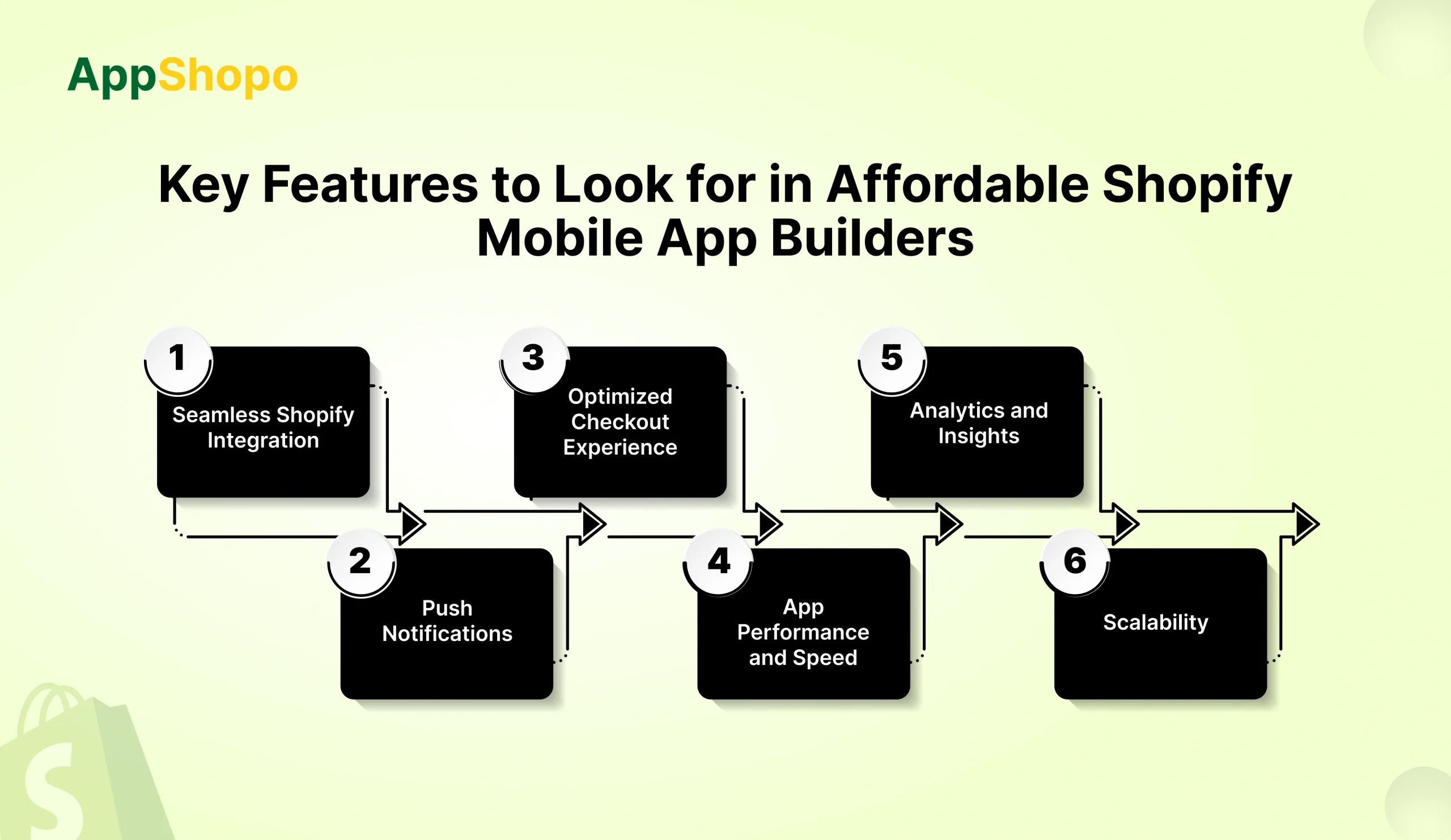
While choosing a Shopify mobile app maker in 2026, the primary factors that lead to the decision are app performance, user engagement, and growth potential that can be supported by the key features. A flawless platform should be the one that assures hassle-free integration with other systems, fast checkouts, better customer communication, easy access to valuable insights, and business expansion without limitations of technology or cost.
1. Seamless Shopify Integration
Seamless is the Shopify integration that enables the real-time synchronization of products, inventories, prices, and orders. In other words, the entire process is automated at present, there is less room for errors, and consistent data is being kept across your website, mobile app, and backend systems.
- Real-time product and inventory updates
- No manual data entry required
- Accurate pricing across channels
- Smooth order management
- Centralized store control
2. Push Notifications
Push notifications grant immediate access to customers through alerts for marketing promotions, customer abandoned carts, order status updates, and personalized offers which directly increase interaction, recurrent visits, and sales without the need for email or social media.
- Higher open rates than emails
- Instant promotional delivery
- Abandoned cart recovery
- Personalized customer messaging
- Stronger brand recall
3. Optimized Checkout Experience
By simply cutting down the steps and making the shopping journey easier, an optimized checkout experience is able to attract more customers. It does so, these are some of the main benefits, this way: fast, secure, and quite easy payment methods are made available which result in less abandonment of the cart, faster purchases and higher conversion rates in general.
- Fewer checkout steps
- Faster payment processing
- Secure transactions
- Reduced cart abandonment
- Higher conversion rates
4. App Performance and Speed
High application performance and speed lead to a smooth navigation of the app, quick loading times, and a function that is stable thereby not allowing the users to leave the app. This improves the user’s experience and hence, they are likely to stay for longer, complete more purchases, and therefore increase the app’s turnover without being annoyed by it or having to wait.
- Faster page loading
- Smooth navigation
- Lower bounce rates
- Better user experience
- Higher retention
5. Analytics and Insights
Analytics and insights deliver comprehensive information regarding users’ activities, buying patterns, and interaction, thus enabling the managers of the stores to monitor the results, refine the promotions, enhance the customizing process and, based on these, make the right decisions for the purpose of customer loyalty and profit increase.
- Track user behavior
- Measure campaign performance
- Identify best-selling products
- Improve personalization
- Data-driven decisions
6. Scalability
With Scalability, the mobile application becomes a part of the business and grows along with it. Increased traffic, new functions, and larger product catalogs can be easily accommodated without changing the platform, rebuilding it, or lowering the performance as the store undergoes development.
- Supports business growth
- Handles higher traffic
- Easy feature expansion
- No redevelopment needed
- Long-term stability
Common Pricing Models Explained
Typically, reasonably priced Shopify mobile app constructors have adaptable pricing strategies that are intended to accommodate various business sizes and stages of growth. By being aware of these plans, traders can select a device that will be economical in terms of money not only during the initial period but also in the long run.
1. Monthly Subscription Plans
This pricing model is the one that is mostly used. A merchant pays a fixed amount monthly or annually, and thus the costs are very predictable and easy to budget. In most cases, these plans come with essential features, for instance, integration with Shopify, sending push notifications, basic analytics, and app maintenance.
2. Feature-Based Pricing
Here the base price is low, but the price will increase if you decide to add advanced features. You may need to upgrade features like customized design, advanced analytics, automation, or loyalty programs. Although the costs are adjustable, they can increase quite fast as the business develops.
3. Revenue-Based Pricing
Some platforms charge a percentage based on app-generated sales. This model lowers initial costs but can become expensive as order volume increases. It is suitable for early-stage stores but less ideal for high-growth businesses.
Choosing the Right Model
If Shopify merchants want to judge the factor of affordability, they ought to emphasize the value over a long period of time rather than on the money saved over a short period of time. A price system that adjusts in a fair manner and helps with expansion will always be better than the lowest price which has some hidden restrictions.
Mistakes to Avoid When Choosing a Budget App Builder
Choosing a budget Shopify app builders without proper evaluation can lead to long-term limitations. Merchants often focus on upfront cost instead of performance, scalability, compliance, and user experience, resulting in apps that fail to support growth and customer expectations.
- Choosing price over performance: Selecting the cheapest app builder often results in slow load times, bugs, limited customization, and poor user experience, which directly impacts conversions, retention, and long-term revenue potential.
- Ignoring app store compliance support: Without proper App Store and Play Store compliance guidance, merchants risk app rejections, delays, or removals, causing wasted investment, lost launch momentum, and unnecessary operational stress.
- Overlooking scalability limitations: Many budget apps work for small stores but struggle with high traffic, product expansion, or advanced features, forcing merchants to rebuild apps later at higher cost.
- Underestimating customer experience impact: A poorly designed app frustrates users with slow navigation, complex checkout, and inconsistent branding, reducing trust, increasing uninstall rates, and negatively affecting repeat purchases.
How Affordable Shopify Mobile Apps Drive ROI
Affordable Shopify mobile apps can deliver strong ROI when built strategically. By improving engagement, retention, and purchase frequency, even budget-friendly apps help merchants reduce marketing costs, increase lifetime value, and create direct customer relationships through owned mobile channels.
- Increased repeat purchases: Mobile apps encourage repeat buying through saved preferences, order history, and personalized recommendations, making reordering effortless and turning one-time buyers into long-term customers.
- Higher average order values: In-app product recommendations, bundles, and exclusive app-only offers motivate customers to add more items per order, increasing average cart value without additional advertising spend.
- Reduced dependency on paid ads: Push notifications and in-app promotions allow direct customer communication, lowering reliance on paid acquisition channels while driving traffic and sales at minimal ongoing cost.
- Stronger brand loyalty: A branded mobile app creates a consistent shopping environment, strengthens emotional connection, and keeps the brand top-of-mind, leading to higher retention and long-term customer trust.
Future Trends in Shopify Mobile App Builders (2026 and Beyond)
Shopify mobile app builders are evolving rapidly to meet future commerce demands. Affordable platforms now integrate advanced technologies like AI, predictive analytics, and deeper Shopify integrations, enabling merchants to access enterprise-level capabilities without enterprise-level budgets.
- AI-driven personalization: AI analyzes customer behavior to deliver tailored product recommendations, content, and offers, increasing relevance, engagement, and conversion rates across every stage of the shopping journey.
- Predictive push notifications: Smarter push notifications use behavioral data to send messages at optimal times, improving open rates, reducing notification fatigue, and driving timely repeat purchases.
- Deeper Shopify ecosystem integrations: Tighter integrations with Shopify features, apps, and APIs ensure smoother operations, real-time data syncing, and easier management of inventory, orders, and customer information.
- Improved analytics and customer segmentation: Advanced analytics tools help merchants understand user behavior, segment audiences effectively, and optimize marketing strategies based on actionable insights rather than guesswork.
Conclusion
Affordable Shopify mobile app builders have transformed how merchants approach mobile commerce. In 2026, launching a mobile app no longer requires massive budgets or technical teams, it requires choosing the right platform.
AppShopo emerges as a powerful and cost-effective solution for Shopify merchants who want to build high-quality mobile apps without overspending. With seamless Shopify integration, scalable features, and a focus on performance and user experience, AppShopo helps businesses move beyond basic affordability toward sustainable growth.
If your goal is to increase conversions, strengthen customer relationships, and future-proof your Shopify store without the burden of expensive development, AppShopo offers a balanced, affordable path forward.
FAQ
1. Are Shopify mobile app builders worth it for small businesses?
Yes, Shopify mobile app builders are worth it for small businesses because they reduce development costs, improve mobile conversions, enable direct customer communication, and help stores compete with larger brands without requiring technical expertise or large upfront investments.
2. What is the cheapest way to create a Shopify mobile app?
The cheapest way to create a Shopify mobile app is using no-code or web-to-app builders. These platforms offer subscription-based pricing, pre-built templates, and automated Shopify integration, significantly lowering costs compared to custom app development.
3. Do Shopify mobile apps really increase sales and retention?
Yes, Shopify mobile apps increase sales and retention by offering faster performance, smoother navigation, one-tap checkout, push notifications, and personalized experiences, which encourage repeat purchases, higher engagement, and stronger customer loyalty over time.
4. Can I scale my Shopify mobile app as my business grows?
Most modern Shopify mobile app builders support scalability by handling increased traffic, expanding product catalogs, and adding advanced features. Choosing a scalable platform prevents costly migrations and ensures your app grows seamlessly alongside your business.
5. How long does it take to launch a Shopify mobile app?
With affordable Shopify mobile app builders, launching an app typically takes a few days to a few weeks. Timelines depend on customization, app store approvals, and feature requirements, but it’s significantly faster than traditional custom development.

Pankaj Arora
Founder, AppShopo

Pankaj Arora is a technology entrepreneur and the Founder of AppShopo, with over 10 years of experience in helping businesses transform websites into high-performing mobile apps. His expertise spans eCommerce app development, Shopify and WooCommerce integrations, mobile UX optimization, and scalable app delivery. Through AppShopo, Pankaj has enabled brands worldwide to launch fast, reliable Android and iOS apps that drive higher engagement, retention, and mobile sales.